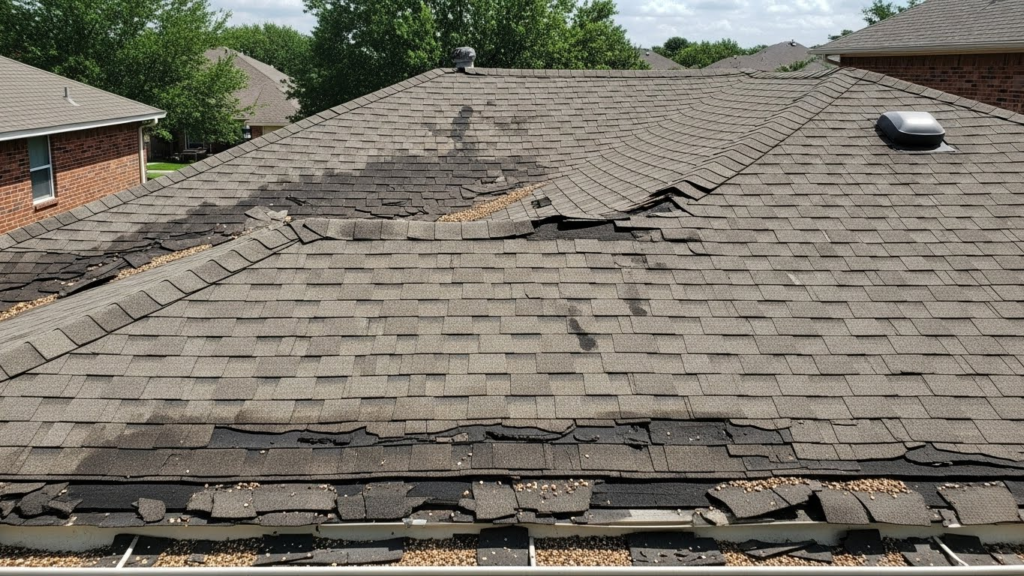
Is your roof quietly failing while you sleep? Most Fort Worth homeowners don’t notice their roof problems until water drips through the ceiling or energy bills skyrocket.
Asphalt shingle roofs in Texas last only 15-20 years compared to 25-30 years in cooler climates due to extreme heat and severe weather.
Catching roof damage early saves thousands in emergency repairs and prevents devastating water damage to your home’s interior.
Your roof endures brutal Fort Worth weather. Intense summer heat reaches 100°F+ for weeks. Sudden hailstorms strike without warning. Spring storms bring high winds that rip shingles. These conditions accelerate roof aging faster than you think.
1. Missing or Damaged Shingles
Walk around your property and look up.
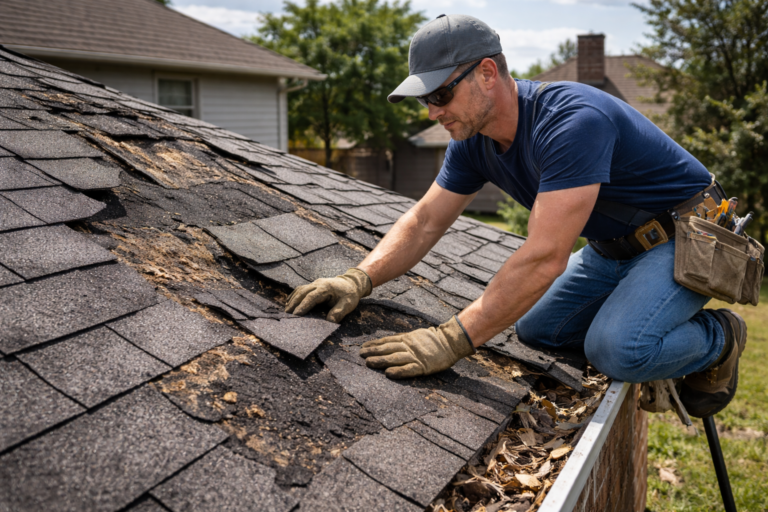
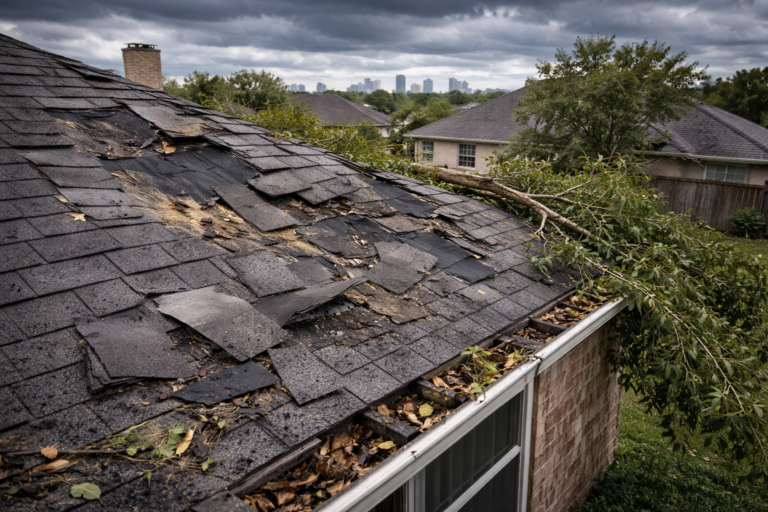
Do you see shingles curling at the edges? Notice cracks running through shingles? Spot completely missing shingles after recent storms?
- Curled shingles signal UV damage from Fort Worth’s intense sun exposure.
- Cracked shingles mean your roof can no longer keep water out effectively.
- Missing shingles leave your home vulnerable to leaks and structural damage.
- Wind-damaged sections often appear in clusters after severe weather events.
Fort Worth storms hit hard. One hailstorm can crack dozens of shingles. Wind gusts exceeding 60 mph rip off aged, brittle shingles. If you find more than 10 damaged shingles spread across your roof, replacement beats patchwork repairs. Our residential roofing services handle everything from minor repairs to complete replacements.
2. Excessive Granule Loss
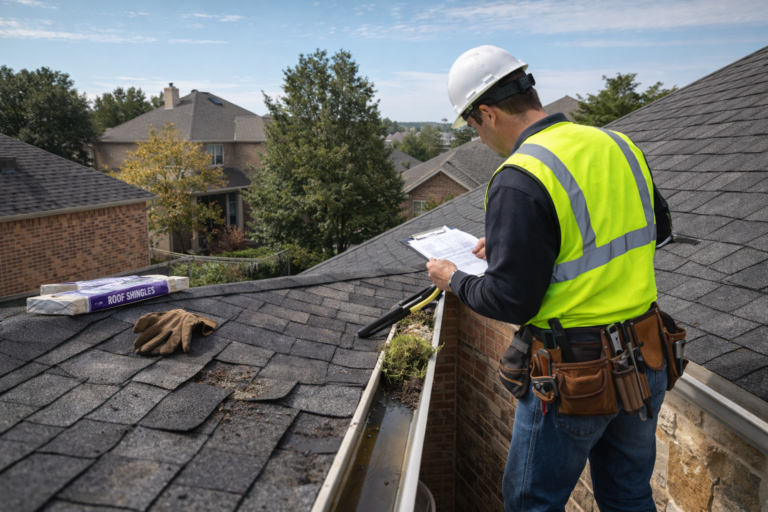
Check your gutters after cleaning them.
- Granules look like coarse black sand collecting in downspouts.
- Bare spots on shingles expose the underlying asphalt material directly.
- Shingle discoloration indicates protective coating has worn away completely.
- Granules washing onto sidewalks after rain shows advanced deterioration.
Granules protect your shingles from UV rays. Without this protection, Texas sun bakes the asphalt underneath. Your roof deteriorates three times faster once granules disappear. Finding heavy granule accumulation signals your roof approaches the end of its functional lifespan. Learn more about how long roofs last in Texas conditions.
3. Roof Age Beyond 20 Years
Most Fort Worth homeowners forget when their roof was installed.
Check your home inspection report from purchase. Ask neighbors if you moved into a new subdivision together. Contact your city’s building department for original permits.
- Standard asphalt shingles last 15-18 years in Fort Worth heat.
- Architectural shingles reach 20-25 years maximum in Texas conditions.
- Premium impact-resistant shingles extend to 25-30 years with proper maintenance.
- Metal roofing systems provide 50-70 years of reliable protection.
Heat accelerates aging. Fort Worth’s climate subtracts 5-7 years from manufacturer lifespan ratings. A 20-year-old roof here equals a 27-year-old roof in cooler states. Consider exploring affordable roofing materials for your replacement project.
4. Water Stains on Ceilings or Walls
Water stains never lie.
Brown or yellow ceiling spots mean water penetrates your roof regularly. Peeling paint near rooflines indicates moisture trapped in walls. Musty odors in attic spaces signal hidden water damage spreading through insulation.
- Small stains grow larger with each rain if left unaddressed.
- Water damage spreads to insulation, drywall, and structural framing rapidly.
- Mold develops within 48 hours in humid Texas conditions.
- Multiple stain locations suggest widespread roof failure throughout the system.
Don’t wait for dripping water. Stains appear weeks before visible leaks. Solutions Contracting can inspect your roof within 24 hours and provide detailed photo documentation of damage.
5. Sagging Roof Sections
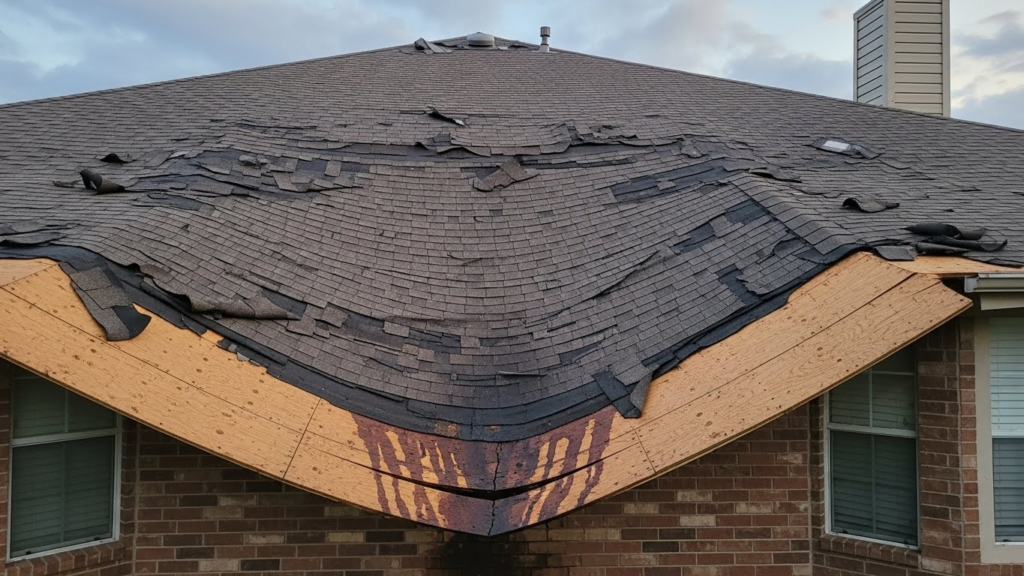
This is an emergency situation.
Stand at street level. Look at your roofline from multiple angles. Straight lines should run across the entire roof. Any dips, waves, or sagging areas indicate serious structural problems.
- Sagging means water-damaged decking beneath your shingles.
- Insufficient structural support causes gradual roof deck collapse.
- Trapped moisture rots wood framing and support beams.
- Foundation settling creates stress points that weaken roof structure.
Check from inside your attic too. Bowing roof boards or visible sagging between rafters requires immediate professional assessment. Solutions Contracting provides emergency storm response to protect your family’s safety.
6. Daylight Through Roof Boards
Try this simple test.
Enter your attic on a sunny day without turning on lights. Look up at the underside of your roof deck.
- Pinhole lights indicate minor shingle gaps requiring targeted repairs.
- Multiple light spots reveal widespread shingle failure throughout the roof.
- Large visible gaps represent immediate emergency situations demanding fast action.
- Light penetration allows rain, insects, and wildlife direct entry.
If you see daylight streaming through, roof replacement Fort Worth services become necessary. Small holes expand quickly during storms.
7. Damaged Flashing Around Penetrations
Flashing seals vulnerable spots where your roof intersects chimneys, vents, and skylights.
Inspect these critical areas carefully:
- Chimney flashing develops rust or pulls away from brick surfaces.
- Valley flashing (where roof slopes meet) shows gaps or corrosion.
- Vent pipe boots crack and dry out in extreme Fort Worth heat.
- Skylight flashing separates from frames, creating water entry points.
Flashing repairs work on newer roofs under 15 years old. Older roofs with flashing problems need complete roof replacement contractors can properly address. Patching old flashing on failing roofs wastes money on temporary fixes. If you notice issues with pipes on your roof, address them promptly.
8. Unexplained Energy Bill Increases
Your roof directly affects home comfort and energy costs.
Compare your electric bills from last year to this year for identical months. A 20% increase without usage changes points to roof or insulation problems.
- Poor ventilation traps 150°F+ attic heat in summer months.
- Water-soaked insulation loses 50-90% of its effectiveness immediately.
- Air leaks through deteriorated roof structure waste conditioned air constantly.
- Your AC runs overtime compensating for heat transfer through damaged roofing.
New roof installation with proper ventilation reduces cooling costs by 15-25%. Energy savings help offset replacement investment over time.
9. Moss or Algae Growth
Fort Worth’s climate makes growth less common than humid regions, but problems still occur.
- Dark algae streaks appear mostly cosmetic but trap moisture against shingles.
- Green moss growth retains significant water and lifts shingle edges.
- North-facing or heavily shaded sections develop growth more readily.
- Sudden moss appearance suggests drainage or ventilation issues developing.
Heavy moss coverage indicates excessive moisture. This moisture accelerates wood rot beneath shingles. Remove moss and improve drainage through proper gutter installations, then schedule a thorough inspection to assess underlying damage.
10. Multiple Previous Repairs
Count how many times you’ve called roofers in the past three years.
Frequent repairs signal bigger problems. One section fails, gets patched, then another area leaks six months later. This pattern shows your entire roofing system breaking down simultaneously.
- Repair costs exceeding 25% of replacement cost make replacement smarter financially.
- Multiple patches on a 20+ year old roof waste money short-term.
- Selling your home within two years requires replacement for market value.
- Widespread damage covering 25%+ of roof surface demands complete replacement.
Solutions Contracting provides honest assessments through our routine inspection plans. We explain repair versus replacement economics clearly so you make informed decisions protecting your investment.
What Roof Replacement Fort Worth Costs in 2026
| Home Size | Standard Shingles | Architectural Shingles | Metal Roofing |
| 1,500 sq ft | $5,000-$8,000 | $6,750-$9,750 | $13,000-$18,000 |
| 2,000 sq ft | $8,000-$12,000 | $9,250-$13,000 | $17,000-$24,000 |
| 2,500 sq ft | $8,700-$13,700 | $11,250-$16,250 | $21,000-$30,000 |
| 3,000 sq ft | $10,500-$16,500 | $13,500-$19,500 | $25,000-$35,000 |
Prices include complete tear-off, disposal, underlayment, premium materials, labor, and workmanship warranties. Complex roofs with multiple valleys or steep pitch add 10-20% to base costs. Explore our stone coated steel roofing for superior durability.
Protect Your Home Before Damage Spreads
Waiting for visible leaks costs thousands more than early replacement. Water damage spreads through insulation, walls, and ceilings rapidly. Mold creates health hazards. Structural rot compromises your home’s safety.
Solutions Contracting offers free professional roof inspections within 24 hours across the Dallas-Fort Worth area. Our team provides detailed photo reports showing exact damage locations. We specialize in designer stone coated steel roofing that withstands Fort Worth’s toughest weather. With 10+ years of quality service and BBB A+ rating, we deliver the trusted expertise your home deserves.
Contact us today at 682-469-9519 for your complimentary roof assessment. Don’t wait until emergency repairs cost twice as much. Protect your family and your investment now.
Frequently Asked Questions
How often should I inspect my Fort Worth roof?
Inspect your roof twice yearly in spring and fall, plus after every major storm. Fort Worth’s severe weather accelerates damage faster than mild climates. Roofs over 15 years old need annual professional inspections to catch problems early.
Will my insurance cover roof replacement?
Storm damage from hail or wind typically qualifies for coverage minus your deductible. Normal aging and wear aren’t covered. Document damage immediately after storms with photos. File insurance claims within one year as Texas law requires.
Can I replace just part of my roof?
Partial replacement creates mismatched appearance and voids manufacturer warranties. If one section needs replacement, the rest will likely fail soon since they’re the same age facing identical weather exposure. Complete replacement protects your investment properly.
What’s the best season for roof replacement in Fort Worth?
Fall (September-November) and spring (March-May) provide ideal weather conditions. Moderate temperatures improve material adhesion and installer productivity. Avoid peak summer heat above 95°F. Book your project 2-3 months ahead during busy seasons.
How long does a new roof last in Fort Worth?
Expect 15-20 years from standard asphalt shingles, 20-25 years from architectural shingles, and 50+ years from metal roofing in Fort Worth conditions. Proper installation, quality materials, and regular maintenance maximize lifespan significantly.