Are you waiting for a ceiling stain or a drip in your living room before you think about your roof? Roofing industry data show that over 80% of roofs across the country are prematurely replaced each year, most often due to neglected maintenance.
In Plano, TX, where summer temperatures push past 100°F and spring hailstorms strike with little warning, your roof absorbs more punishment than most homeowners realize.
A $300 annual tune-up can save you from a $10,000 to $30,000 replacement down the road. This guide covers the exact Plano roof maintenance services and tasks that keep your home protected, your warranty intact, and your repair bills low.
Why Plano’s Unpredictable Weather Can Compromise Your Roof
North Texas roofing specialists deal with a unique combination of threats that most other regions never face at once. Plano sits right in the path of severe hail corridors, high UV exposure, and dramatic temperature swings that cycle between 20°F winters and 105°F summers.
- Hail damage assessment is critical after every spring storm because even small dents strip protective granules from asphalt shingles and weaken underlayment integrity over time.
- UV degradation protection matters year-round since intense Texas sun bakes protective oils out of roofing materials, causing cracking and curling within just a few seasons.
- Thermal expansion and contraction loosens flashing joints, separates sealant around pipe boots, and creates gaps where water sneaks in during heavy downpours.
- Wind-blown shingle repair becomes necessary after gusts that regularly top 50 mph during North Texas storm season.
These weather patterns mean a roof in Plano TX may only last 15 years without proper care, compared to 25 or more with consistent upkeep.
Schedule Bi-Annual Roof Inspections with Local Plano Roof Inspectors
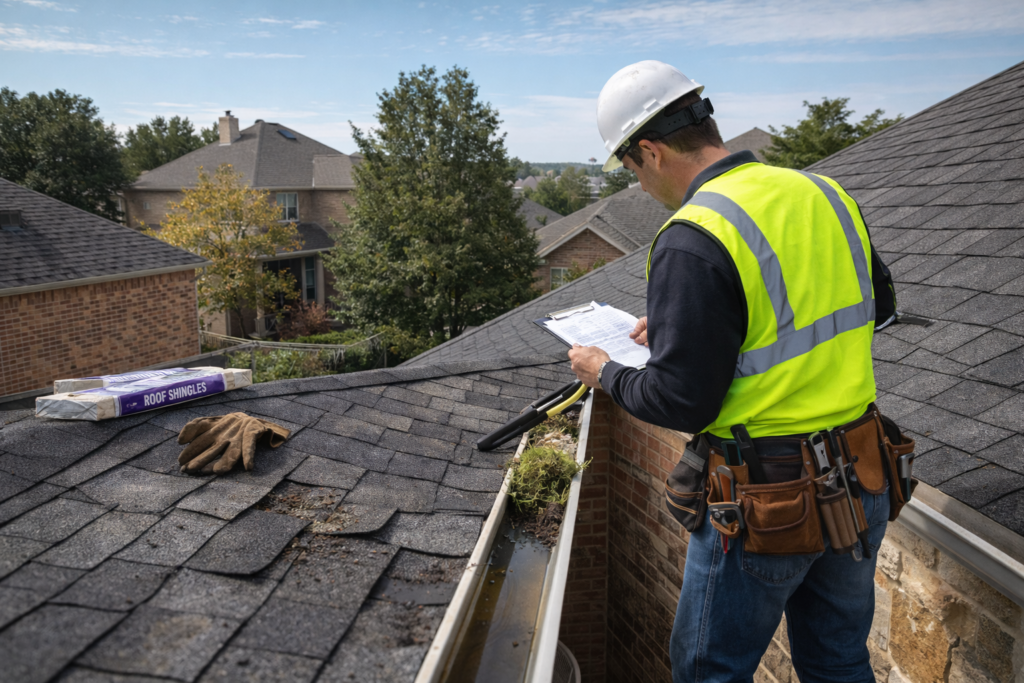
The single most important step you can take is booking a professional roof inspection twice a year. Spring and fall visits align perfectly with Plano’s storm patterns. Local Plano roof inspectors know exactly where to look for hail dents on ridges, pooling water in valleys, and hidden moisture under shingles.
- A thorough flashing inspection around chimneys, skylights, and vents catches separation before leaks start.
- Attic ventilation checks confirm that ridge vents and soffits are moving hot air out and cool air in, reducing cooling costs by 10 to 15 percent.
- Leak detection and waterproofing assessments use moisture meters to find wet spots in roof decking and sheathing without cutting into your roof.
Our team at Solutions Contracting offers a free 21-point inspection that covers every component from drip edge installation to chimney cricket and flashing condition. Catching problems at this stage means stopping minor issues from becoming major expenses.
Gutter Cleaning, Debris Removal, and Drainage Alignment
Clogged gutters are one of the top causes of premature roof failure in Plano residential homes. When leaves, branches, and granules block water flow, moisture backs up under your shingles and rots the eaves and rafter tails underneath.
- Gutter cleaning and alignment should happen every three to four months, or immediately after major storms.
- Debris removal from gutters and valleys prevents standing water that promotes mold growth and fascia board decay.
- Ice dam prevention matters even during rare Texas freezes because blocked drainage combined with sudden cold can force water under shingle edges.
Proper drainage protects more than just your roof. It shields your foundation, siding, and landscaping from erosion and water damage.
Shingle Replacement, Sealant Reapplication, and Pipe Boot Repair
Small repairs done promptly are the backbone of any extended roof lifespan strategy. A single missing shingle can lead to decking damage within one heavy rain.
- Shingle replacement should happen immediately when you spot cracked, curled, or bare spots where granules have worn away.
- Sealant reapplication around flashing joints and vent pipes keeps water out as caulking dries and separates in the Texas heat.
- Pipe boot repair addresses cracked rubber collars that are one of the most common leak sources on any roof in Plano TX.
- Caulking touch-ups around skylight edges and chimney bases seal vulnerable transition points.
Plano residential roofing experts recommend using impact-resistant shingles for replacements. These carry a Class 4 rating and can reduce insurance premiums while offering superior storm damage restoration performance.
High-Heat Ventilation Solutions and Energy Efficiency Improvements
Your attic plays a direct role in how long your roof lasts. In Plano, a poorly ventilated attic can reach 150°F in summer, literally cooking your shingles from below.
- Ridge vents and soffits must remain clear of insulation and debris to maintain balanced airflow.
- High-heat ventilation solutions like powered attic fans prevent moisture buildup that leads to mold and decking rot.
- Proper attic insulation between R-30 and R-60 stabilizes temperatures and delivers real energy efficiency improvements on your monthly bills.
A well-ventilated roof also supports manufacturer warranty compliance. Most asphalt shingle and metal roofing systems warranties require documented proof of adequate ventilation.
When to Call Plano Roofing Contractors for Emergency Roof Repair
Not every situation can wait for a scheduled visit. Thinking about whether you need emergency roof repair in Plano? Look for these warning signs.
- Multiple missing shingles after a storm.
- Visible daylight through attic boards.
- Active dripping during rainfall.
- Sagging sections along the roofline.
Storm damage restoration should begin within hours, not days. scroofingtx.com provides 24/7 emergency and storm response with drone inspections, temporary roof protection, and full insurance claim support. We document every detail with photos to help you maximize your insurance claim potential.
Protect Your Roof, Protect Your Investment
Don’t wait for a leak to call a pro. Every season that passes without an annual roof tune-up brings your Plano home closer to a repair bill that could have been avoided. Whether you need a basic inspection, gutter cleaning, shingle repair, or a full preventative maintenance program, working with licensed and insured Haag certified inspectors makes all the difference.
Ensure your home is storm-ready by scheduling a free inspection with scroofingtx.com today. Call us at 682-469-9519 or visit our contact page. Our team of roofing companies in Plano TX is here to help you extend your roof’s lifespan, protect your curb appeal enhancement, and keep your family safe under a roof built to handle whatever North Texas throws at it.
Frequently Asked Questions
How often should Plano homeowners schedule roof maintenance?
Twice a year is the standard recommendation for homes in North Texas. Spring and fall inspections align with hail season and winter prep. You should also book an inspection after any severe weather event that brings hail or sustained winds above 50 mph.
What does a preventative maintenance program typically include?
A solid program covers a full visual and structural inspection, debris removal from gutters and valleys, flashing inspection, sealant reapplication, pipe boot checks, attic ventilation verification, and a detailed report with photos. Most programs cost between $300 and $800 annually.
Can regular roof maintenance help with insurance claims?
Yes. Documented maintenance records prove you have taken responsible care of your property. Insurance adjusters are more likely to approve full replacement cost coverage when you can show consistent upkeep and professional inspection reports.
What are the most common roof problems in Plano, TX?
Hail damage to asphalt shingles, wind-blown shingle lift, cracked flashing from thermal expansion and contraction, clogged gutters causing water backup, and UV degradation that strips granules are the top five issues North Texas roofing specialists see most often in Plano neighborhoods.
How long does a well-maintained roof last in Plano?
With consistent maintenance, an asphalt shingle roof in Plano can last 25 to 30 years. Metal roofing systems often exceed 40 years. Without maintenance, that same asphalt roof may fail in as few as 12 to 15 years due to the harsh Texas climate.