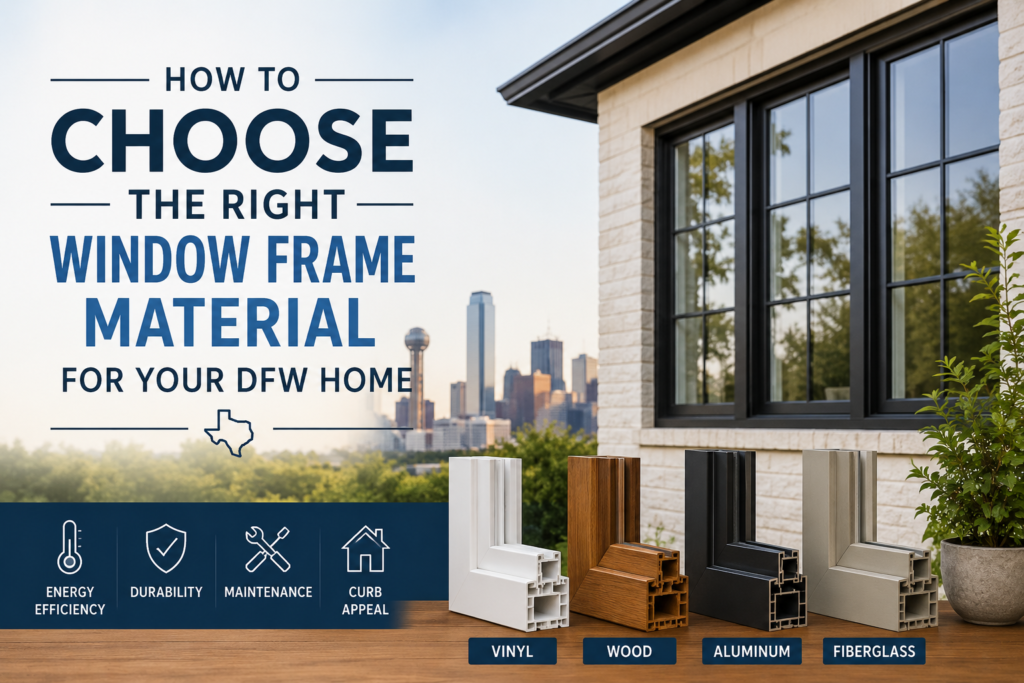
Are your windows making the AC fight a losing battle every July? For most homes across Dallas-Fort Worth, the answer comes down to the frame: vinyl window frames give you the best mix of price and energy efficiency, fiberglass window frames give you the longest life in Texas heat, and aluminum-clad wood gives you a premium look without the rot.
The frame holds the glass, seals out the weather, and decides how much heat leaks into your living room. The U.S. Department of Energy reports that heat gain and heat loss through windows cause 25% to 30% of residential heating and cooling energy use.
That is a big slice of your energy bills riding on one decision. This guide compares every window frame material, with real DFW numbers, so you can pick the right window frame material with confidence.
Why Window Frame Material Matters in the Texas Heat
North Texas weather punishes window frames harder than almost any climate in the country. Triple-digit summers, sudden temperature swings, hail season, and constant UV exposure all attack the frame before they ever touch the glass. The wrong material warps, leaks, and quietly raises your cooling costs every month.
Here is what your frames are up against in the DFW metroplex:
- Extreme heat forces frames to expand and contract, which weakens seal integrity over time.
- Relentless sun breaks down materials that lack UV stabilizers, causing fading and brittleness.
- Clay soil shifts under many older Dallas homes, so rigid, stable frames hold their seals longer.
- High humidity swings invite rot and moisture damage in unprotected wood.
Comparing the Most Popular Window Frame Materials for DFW Homes
Vinyl Window Frames: Affordable, Low Maintenance, and Energy Efficient
Vinyl windows are the most popular choice for window replacement in DFW, and the value is hard to argue with. Quality frames are made from PVC with UV stabilizers, so they resist warping and cracking under direct sun. Many are foam-filled for extra insulation, which helps reduce heat transfer on west-facing walls.
- You never deal with painting or staining, since a rinse with soap and water keeps them clean.
- You get strong thermal performance at the lowest cost, which is why budget-friendly upgrades start here.
- You should skip dark colors on sun-blasted walls, because darker vinyl frames can warp in direct sunlight.
Expect a 20 to 30 yr lifespan from high-quality vinyl with limited color options as the main trade-off.
Fiberglass Window Frames: Built for Texas Temperature Swings
Fiberglass windows are the premium option for homeowners who want frames that simply outlast the weather. Fiberglass expands and contracts at nearly the same rate as glass, so the seal between frame and pane stays tight through every season. Its low thermal conductivity also makes it an excellent insulator.
- You get a frame that will not warp, rot, or corrode, even after decades of Texas storms.
- You can choose finishes that mimic the look of painted wood with sleek modern profiles.
- You pay a higher upfront cost, but the 30 to 50 yr lifespan rewards long-term value.
Wood and Wood-Clad Window Frames: Classic Beauty With More Upkeep
Wood windows bring timeless charm and excellent natural insulation, which makes them a favorite for historic homes. The catch is regular maintenance, because bare wood needs painting, staining, and sealing to prevent rot and insect damage in our humidity. Wood-clad windows solve most of that problem.
- You keep the warm wood interior while a protective aluminum exterior shields the frame from UV rays, heat, and moisture.
- You boost resale value in character-rich neighborhoods where authentic style matters.
- You still budget more, since clad wood sits near the top of the price range.
Aluminum Window Frames: Strength and Slim Profiles, Weaker Insulation
Aluminum windows offer real strength, slim profiles, and support for large glass panes with expansive views. The weakness is physics, because aluminum conducts heat straight into your home. Many DFW houses built in the 1990s still carry builder-grade aluminum windows, and those frames are a major reason summer bills climb.
- You should only consider modern aluminum windows with thermal breaks, which block direct heat transfer.
- You gain a sleek modern look that suits contemporary designs and black-framed windows trends.
- You accept weaker insulation than vinyl or fiberglass, even in upgraded frames.
Composite and Steel Window Frames: Premium Options Worth a Look
Composite windows blend wood fibers and PVC to deliver the best of both worlds, meaning wood looks with vinyl-level durability and low maintenance. Their rigidity makes them a smart pick for older homes with settled or shifting openings. Steel windows sit at the luxury end, and our steel windows design guide for luxury homes breaks down where they shine.
Window Frame Material Comparison Table
| Material | Cost per window installed | Lifespan | Maintenance | Energy efficiency |
| Vinyl | $350 to $650 | 20 to 30 yrs | Very low | Excellent |
| Fiberglass | $700 to $1,200 | 30 to 50 yrs | Very low | Excellent |
| Wood / wood-clad | $600 to $1,000+ | 15 to 30 yrs | High / moderate | Very good |
| Aluminum | $400 to $800 | 20 to 25 yrs | Low | Fair, needs thermal breaks |
| Composite | $650 to $1,100 | 30 to 40 yrs | Very low | Excellent |
Glass Options Matter as Much as the Frame
The best window frame material still fails if the glass is wrong for our sun. For DFW, the proven recipe is double-pane windows with a Low-E coating and argon gas fill, since the coating reflects infrared heat while letting natural light through. Single-pane glass belongs in the past, and triple-pane windows are usually overkill here unless a wall takes brutal afternoon sun.
- Look for a Solar Heat Gain Coefficient (SHGC) of 0.25 or lower on south and west exposures.
- Look for a U-factor of 0.30 or lower, along with ENERGY STAR certified ratings.
- Look for warm-edge spacers, which cut condensation and slow seal failure at the glass edge.
Signs You Need New Windows in North Texas
DFW homeowners rarely replace windows too early. The frames usually announce the problem first, so watch for these warning signs:
- Drafts near closed windows, which point to air leakage around aged frames.
- Fog between panes, the classic sign of broken seals in double-pane units.
- Sashes that stick when you open or close them, caused by frame warping from heat cycles.
- Rising summer bills, since failing windows quietly drain energy savings every month.
- Dents or cracks after hail, where our emergency storm response team can document storm damage for an insurance claim.
Window Replacement Cost in DFW: What to Budget
Window replacement cost in DFW runs about $350 to $1,200 per window installed, depending on frame material, glass package, and window size.
A typical whole-home project of 10 to 15 windows lands between $5,000 and $15,000, and custom-sized windows for non-standard openings add a little more. Upgraded Low-E glass adds roughly $50 to $100 per window yet can trim cooling use by 15% to 25% in a Texas summer, and financing options help spread the investment out.
The payoff goes beyond the bills. New windows lift curb appeal, improve comfort and security, and raise home value when you sell.
Professional Installation Protects Every Material
Even the most energy-efficient window frame material fails when the installation is sloppy, because gaps in sealing and flashing invite leaks, drafts, and early seal failure. Precision matters more than the label on the box. Solutions Contracting approaches every window and door replacement with that mindset, pairing premium materials with proven techniques and a clean finish across popular window styles like double-hung, casement, picture, bay and bow, and sliding windows.
Pick the Perfect Frames Before the Next Texas Summer Hits
Choosing the right windows for your home comes down to three honest questions. What is your budget, how much upkeep will you actually do, and how long do you plan to stay? Vinyl wins for value, fiberglass wins for longevity, and wood-clad wins for character, while every option needs the right Low-E glass behind it.
You do not have to sort through frame materials, ratings, and quotes alone. Our team at Solutions Contracting has guided homeowners from Dallas to Fort Worth through exterior upgrades for over 10 yrs, and we will give you straight answers instead of a sales pitch. Request your free estimate today, and let Solutions Contracting match the perfect windows to your home, your budget, and the brutal Texas sun.
Frequently Asked Questions
What is the most energy-efficient window frame material?
Fiberglass and foam-filled vinyl lead the pack for energy efficiency. Both resist heat transfer far better than aluminum. Pair either frame with Low-E double-pane glass for the strongest results in DFW.
Do vinyl windows warp in extreme Texas heat?
Quality vinyl frames made with UV stabilizers hold their shape through DFW summers. Cheap or dark-colored vinyl on a west wall is the real risk. Stick with lighter colors and proven frames on sun-heavy exposures.
Is fiberglass worth the extra cost over vinyl?
It depends on how long you plan to stay. Fiberglass costs more upfront but lasts up to twice as long and holds seal integrity better. Homeowners staying 15+ yrs usually come out ahead with fiberglass.
How long do window frames last in DFW?
Vinyl lasts 20 to 30 yrs, aluminum 20 to 25 yrs, and fiberglass or composite 30 to 50 yrs. Wood varies most, since upkeep decides everything. Heat, sun, and soil movement shorten any neglected frame.
Does insurance cover window replacement after storm damage?
Most Texas homeowner policies cover windows damaged by hail or wind-blown debris. Document the damage quickly and file before seals fail further. Our contact team can inspect and support your claim paperwork.