So when it comes to replacement windows, your frame material matters more here than almost anywhere in the country. Most homeowners land on two finalists: vinyl windows and fiberglass windows. Both promise comfort and lower cooling costs, yet they behave very differently once the Texas heat sets in.
This guide breaks down the real vinyl vs fiberglass windows Texas decision, with field notes from the Solutions Contracting team across DFW.
How the Texas Heat Punishes Your Windows
Texas weather is brutal on anything that faces the sun all day. Frames expand, contract, and bake from sunrise to sunset. Over the years, that cycle wears down weaker materials faster than the brochures admit.
- UV rays fade and chalk softer frames, so cheap vinyl frames can look dull and brittle within a decade.
- Thermal expansion stretches and shrinks the frame daily, which slowly breaks the seal around the glass.
- Trapped moisture and condensation between panes point to a failed seal, a problem our crews spot often on west-facing walls.
- North Texas clay soil shifts with the seasons, and that movement adds quiet stress to every window opening.
- South and west elevations take the worst beating, since the low afternoon sun drives heavy heat transfer straight indoors.
During roof and exterior inspections across Fort Worth and Dallas, our team sees these failures up close. That is why we treat window replacement as a heat problem first, not a style choice. You can compare options in our window frame material guide for DFW homes.
Vinyl Windows in the Texas Heat
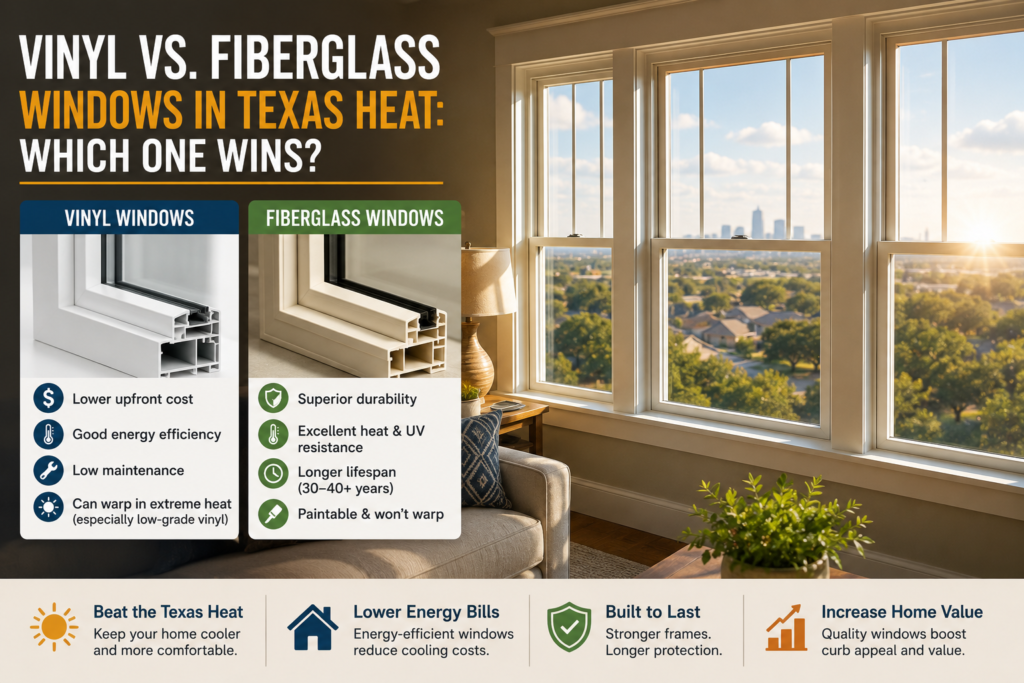
Vinyl windows are made from polyvinyl chloride (PVC) and rule the DFW market for one clear reason: price. They insulate well and ask for very little upkeep. For many budgets, they stay a smart, practical pick.
- Strong energy efficiency comes from hollow, multi-chamber frames that slow heat transfer.
- Low maintenance is a real perk, since the color runs through the frame and never needs paint.
- Friendly pricing makes a whole-home set of energy-efficient windows far easier to afford.
- Reinforced, premium vinyl handles extreme heat much better than thin builder-grade versions.
Where Vinyl Struggles
- Thin vinyl frames can warp or sag after repeated 100°F summers, often between years 5 and 7.
- Dark colors absorb more sun, so warping risk climbs fast on south and west windows.
- Vinyl expands far more than glass, which strains the seal and shortens its lifespan.
Fiberglass Windows in the Texas Heat
Fiberglass windows are built from pultruded glass fibers, the same base material as the glass they hold. That shared makeup is their secret weapon in our climate. They barely move when the temperature swings.
- Dimensional stability keeps the frame from warping, even through triple-digit afternoons.
- Fiberglass expands at nearly the same rate as glass, which protects the seal and blocks fading inside the panes.
- Superior durability gives these frames a lifespan of 30 years or more with little fuss.
- They resist UV rays and hold their finish far longer than softer materials.
- Strong frames carry larger glass areas, which suits picture windows, casement windows, and wide double-hung windows.
Homeowners who plan to stay put for the long haul often find fiberglass pays them back. For a premium route, our modern steel windows design guide shows another heat-ready upgrade.
Vinyl vs. Fiberglass Windows: Head-to-Head Comparison
| Factor | Vinyl Windows | Fiberglass Windows |
| Upfront cost (installed) | $400 to $900 per window | $900 to $1,500+ per window |
| Lifespan in Texas | 20 to 25 years | 30 to 40+ years |
| Heat and UV resistance | Good, better when reinforced | Excellent |
| Frame expansion | High stress seals | Very low, near glass |
| Energy efficiency | Strong | Strong to superior |
| Maintenance | Low, no painting | Low, fully paintable |
| Color flexibility | Limited dark colors | Wide and paintable |
| Best fit | Budget and quick payback | Long-term durability |
Energy Efficiency and Glass That Beats the Texas Sun
The frame material is only half the battle in the Texas climate. The glass package decides how much sun heat reaches your living room. Smart choices here trim your energy bills every single month.
- Low-E glass reflects radiant heat while letting daylight through, which is a must in hot climates.
- Argon gas between the panes adds insulation and lowers heat transfer.
- Double-pane windows are the baseline, while triple-pane adds comfort on the sunniest walls.
- A low U-factor and a Solar Heat Gain Coefficient (SHGC) at or below 0.25 fit our Southern zone.
- ENERGY STAR certified windows confirm the thermal performance you are paying for.
Pairing the right glass with the right frame is where our crews earn their keep. The Solutions Contracting team sizes both to your exact walls and sun exposure.
Cost, Lifespan, and Long-Term Value
Sticker price tells only part of the story. A cheap window that fails in 12 years can cost more than a sturdy one that lasts 35. Real value lives in the years between install and replacement.
- Vinyl windows win on upfront cost and fast payback for shorter stays.
- Fiberglass windows win on durability and total cost across decades.
- Lower cooling costs ease the summer bill spike year after year.
- Flexible financing keeps a full upgrade within reach for most DFW families.
So, Which One Wins for Your DFW Home?
Here is the honest verdict on vinyl vs fiberglass windows Texas homeowners keep asking us about. Pick vinyl windows when budget leads and you still want strong comfort. Pick fiberglass windows when you plan to stay for the long run and want frames that shrug off the sun.
- Choose vinyl for rentals, flips, or tight budgets that still need real energy efficiency.
- Choose fiberglass for forever homes, big openings, and the lowest upkeep over time.
- Skip aluminum windows for living spaces, since metal conducts heat and fights your AC.
- Treat wood windows with caution, because our humidity and sun make them harder to maintain.
Ready to Beat the Texas Heat at Your Windows?
The right window does far more than frame a view. It guards your home against the sun, steadies your energy bills, and lifts your curb appeal for years. In our climate, that choice deserves real expertise, not a lucky guess.
Solutions Contracting installs heat-ready replacement windows across Fort Worth, Dallas, McKinney, and the wider DFW area, backed by a solid warranty. Tell us about your home, and our team matches you with the right frame material, glass, and budget. Call 682-469-9519, book a free estimate, or explore our full windows and doors lineup today.
Frequently Asked Questions
Do vinyl windows warp in Texas summers?
Thin, low-grade vinyl can warp after repeated 100°F heat, usually on south and west walls. Reinforced vinyl frames hold their shape much better. Solid professional installation lowers the risk even more.
Are fiberglass windows worth the extra cost in DFW?
For homeowners staying 10 years or longer, yes. Their lifespan and dimensional stability in extreme heat repay the premium. For short stays, vinyl often makes more sense.
What SHGC and U-factor should Texas windows have?
Aim for a Solar Heat Gain Coefficient (SHGC) at or below 0.25 for our Southern climate. Pair it with a low U-factor and Low-E glass. Those numbers block the most afternoon heat.
Which lasts longer in the vinyl vs fiberglass windows Texas debate?
Fiberglass windows typically last 30 to 40 years, while vinyl windows last 20 to 25. Fiberglass barely expands, so seals survive longer. That gap widens in our harsh Texas heat.
Can new windows really lower my energy bills?
Yes, because windows drive 25% to 30% of heating and cooling use. Energy-efficient windows with argon gas and double-pane glass cut that load. Most homeowners notice the drop the first summer.