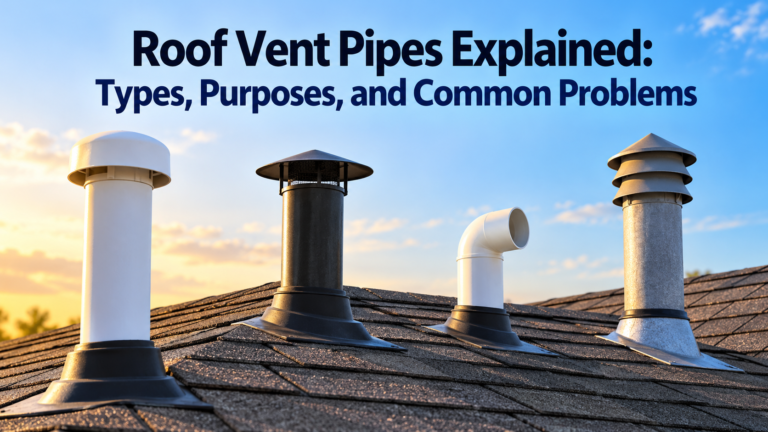
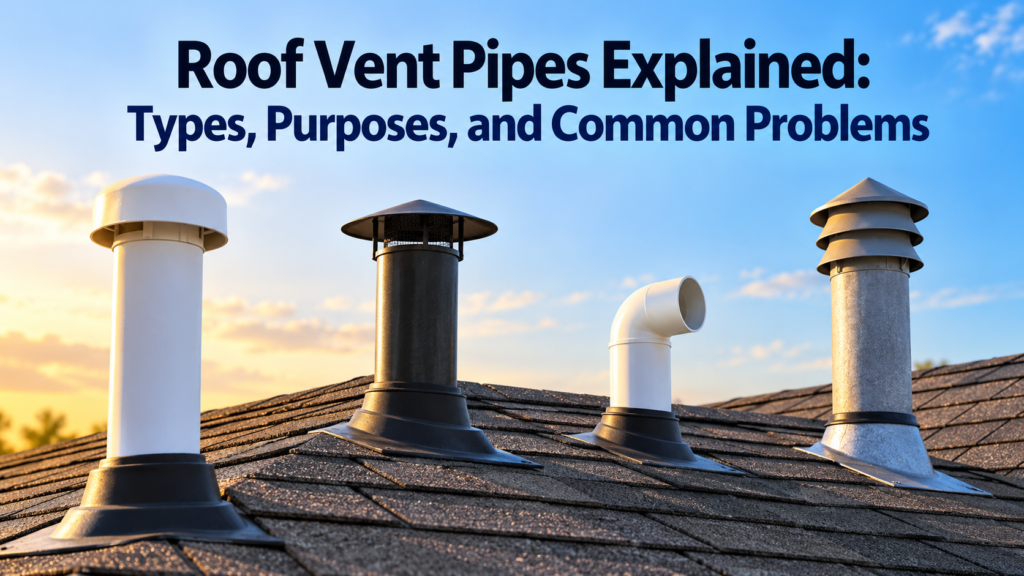
Did you look up at your shingles and think, what are the pipes on my roof called? Most are plumbing vent pipes that let air into drain lines and release sewer gas outside. Their shapes can make each one hard to identify.
Knowing the difference helps you spot trouble before a drain slows down or a ceiling stain appears. Some roof pipes serve your plumbing, while others vent gas appliances, exhaust fans, or the attic. Each needs the right opening and a sound seal where it passes through your roof.
In North Texas, those seals face heat, wind, and hail. The Insurance Information Institute reports 902 major hail events in Texas in 2025, the highest state total. So, check boots and collars after storms.
What Are the Pipes on My Roof Called?
The name depends on the system below the pipe, rather than its height alone. A plumbing vent stack carries air and gases as part of the drain-waste-vent (DWV) system.
A soil stack carries waste from toilets, while a plumbing stack is a broader term for vertical plumbing piping. Above the highest drain connection, it can extend through the roof as a stack vent.
| Pipe on your roof | What it serves | Common appearance |
| Plumbing vent stack | Drains and toilets | White, black, or metal pipe with an open top |
| Furnace or water heater flue | Gas appliances | Metal pipe with an approved vent cap |
| High-efficiency furnace pipes | Appliance intake and exhaust | Often paired plastic pipes; some exit through walls |
| Bathroom or dryer exhaust | Fans and dryers | Hood or cap, often with a damper |
| Attic vent | Attic airflow | Turtle vent, turbine, or ridge vent |
So, what are the pipes sticking out of my roof made of? Older homes, including many built before the 1980s, may have cast iron or galvanized stacks that can corrode. Newer plumbing commonly uses PVC or ABS, although color alone cannot confirm a pipe’s purpose.
If you want to identify the pipes on your roof, start with these clues. Confirm each pipe’s purpose before changing any cap or seal.
How a Roof Plumbing Vent Pipe Works
When you drain a bathtub, moving water changes the pressure inside your drain lines. A roof plumbing vent pipe allows air into the system, so water can flow without pulling water from nearby traps.
A “drain vent on roof” is the outdoor opening of this system, which serves 3 main purposes:
- Balances air pressure: Air enters the vent as water drains, which helps your sinks, tubs, and toilets empty smoothly.
- Protects P-traps: These curved pipes hold water that blocks sewer gas. Proper venting helps keep that water seal in place.
- Releases sewer gas outdoors: The stack carries gases above the roofline. The Agency for Toxic Substances and Disease Registry explains that hydrogen sulfide smells like rotten eggs. It can form part of sewer gas.
Types of Plumbing Vents
Plumbers choose a vent layout based on the fixtures, pipe sizes, and local code:
- True vent: A dry vent carries air rather than wastewater and connects to a vent system or extends outdoors.
- Wet vent: This pipe drains certain fixtures while also venting others, within the limits of the plumbing code.
- Common vent: A shared vent serves 2 fixture traps in an approved layout, such as paired sinks.
- Loop vent: This arrangement helps vent an island sink where a normal upward vent route would not work.
- Air admittance valve (AAV): A one-way valve admits air and closes against sewer gas. However, the system still needs at least 1 vent that opens outdoors, and local rules determine where you can use an AAV.
These vents do not all pass through the roof. For those that do, Solutions Contracting checks the surrounding seals through our residential roofing services. If we find a plumbing issue, we explain why you need a licensed plumber.