
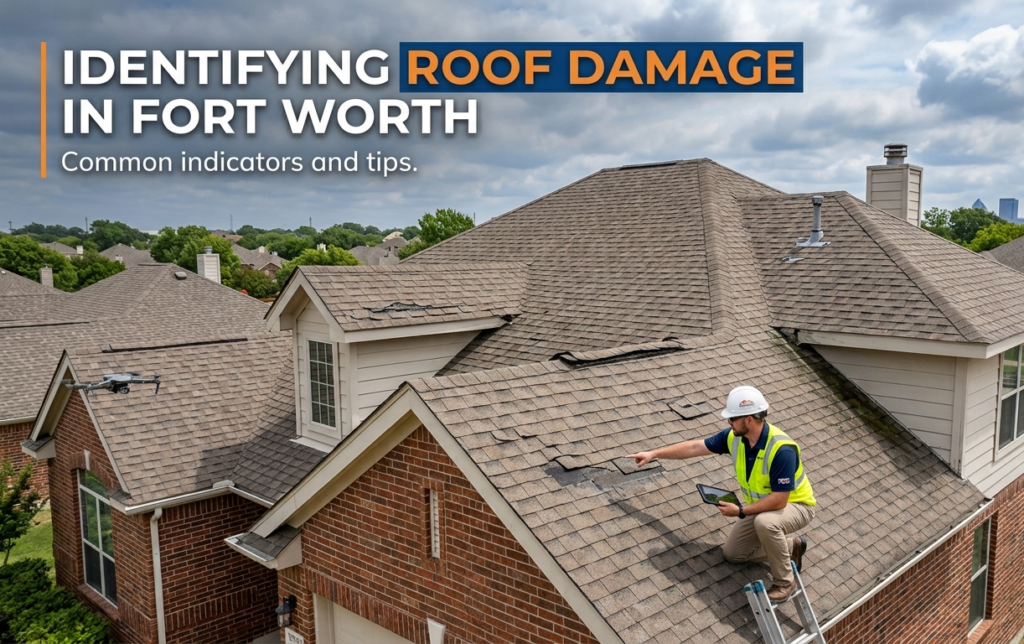
The common signs of roof damage in Fort Worth homes include missing, cracked, or curling shingles, granule loss in gutters, water stains on ceilings and walls, damp insulation or daylight through the roof boards, and damaged flashing around chimneys and vents.
Your roof may still look fine from the driveway, yet a faint brown ring on the hallway ceiling can show that water has already found its way inside.
Many early signs of roof damage stay quiet for weeks before water reaches a living room. Texas recorded 902 major hail events in 2025, more than any other state, according to Triple-I. Because storms reach Tarrant County so often, Fort Worth homes can have storm damage even when the shingles look normal from the curb.
Top 5 Signs of Roof Damage to Check First
- Missing or lifted shingles after hail or storms, especially near ridges and roof edges where wind pressure builds.
- Granules accumulating in your gutters or collecting at the base of your downspouts after heavy North Texas rain.
- Water stains on ceilings or attic rafters, often yellow, brown, or grey rings that return after a storm.
- Daylight peeking through the roof boards when you stand in the attic with the lights off.
- Sagging, dipping, or uneven sections along the roofline when you look at the house from the street.
Why Roof Damage Stays Hidden in Fort Worth Homes
Water travels along the path of least resistance. It can slide down rafters, pipes, or framing before it reaches the drywall, so the stain rarely sits directly beneath the breach. That is why interior signs of roof damage can look far away from the real source of a leak.
Fort Worth weather adds more stress. Golf-ball-sized hail in spring and 100-degree heat in summer can work seals loose and dry the oils in asphalt shingles. Heat cycling also makes materials expand and shrink, which slowly breaks seals around weak areas.
Ground-Level Roof Damage Checklist
A careful walk around your home can reveal many signs of roof damage without a ladder. Start after a storm, then look again when the ground is dry.
- Shingles that curl, crack, or lift at the edges often show long-term weathering. A few curling shingles may need close inspection, while widespread curling or cupping can show that the roof is aging out.
- Dark patches or bare spots on shingles may expose the exposed asphalt mat below. Also check for bald spots where granules are missing.
- Look for shingle pieces in your yard. They can mean the sealant strip has failed, especially if you also see lifted or creased shingles.
- Check for dented gutters and downspouts, dents in metal valley flashing, and marks on soft metal vents. These are common hail damage signs.
- Watch for debris buildup in valleys and gutters. It holds moisture against the roof and can damage your roof decking.
Granule Loss in Gutters and Downspouts
Granules provide UV resistance for the protective coating on asphalt shingles. When they wash away, the asphalt mat below can dry out faster. Some granule loss is normal on a new roof, but excessive granule loss in gutters on an older roof deserves attention.
Persistent granule loss throughout the entire gutter system can mean the shingles are wearing out. It can also create debris buildup in gutters from granule loss, which contributes to clogged drainage. We can handle gutters and drainage with the roofing work, so water can move away from your home as it should.
Attic Signs of Roof Damage
Your attic often shows the problem before the ceiling does. After the next heavy rain, take a flashlight up and look carefully without stepping on insulation or roof decking.
- Daylight through the roof boards means a gap can also let in wind-driven rain.
- Damp insulation needs attention because wet insulation loses its R-value. That can make your HVAC work harder during a Fort Worth summer.
- Dark stains or streaks on the sheathing, darkened wood or wet nails, and sagging or discolored roof decking all point to moisture that has stayed too long.
- A musty smell after rain can be an early warning. It may come before visible dripping or mold or mildew growth in the attic.
Poor airflow makes moisture and heat worse, so roof ventilation should be part of the check. Our free roof inspection includes attic evaluations, and we use thermal cameras and moisture meters to find hidden wet areas before they spread.
Interior Signs of Roof Damage
Homeowners often notice the first clue indoors because they walk past it each day. Do not ignore these changes, especially when they appear after rain.
- Water stains on ceilings and walls can be yellow, brown, or grey rings. They often return after a storm.
- Peeling paint or bubbling wallpaper can show that moisture has weakened the surface behind it.
- Sagging ceilings or soft drywall spots can mean water pooled above that area.
- Damp or musty odors may point to damp materials or mold or mildew growth in the attic.
- Sudden spikes in energy bills can happen when saturated insulation no longer protects your indoor temperature.
- Cracks in the ceiling or walls close to the roofline can suggest structural movement, not simple settling.
Hail Damage Signs on Fort Worth Roofs
Hail acts like a hammer on the asphalt mat. It can leave soft or bruised spots on shingles while the surface still looks normal from the ground. That hidden damage reduces the roof’s water-shedding ability and can let leaks begin later.
- Soft or bruised spots on shingles can feel slightly weak under a trained inspection.
- Dark, circular indentations on shingles are a common bruise pattern.
- Visible bruising or cracks on shingles from hail impact often appear on the slope facing the storm.
- Granule loss in gutters may increase after a hailstorm.
- Dents in a metal roof can be hard to see, but they still show impact.
Around 1-inch hail can remove granules. 1.5-inch hail can crack shingles and bruises underlayment. 2-inch hail or larger can puncture some roofing materials. IBHS studies hail impact and publishes impact-resistant shingle ratings. For homes that face repeated hail seasons, we also install stone coated steel.
Wind Damage Roof Signs After a North Texas Storm
Wind damage roof signs often begin along shingle edges. High-velocity straight-line winds create uplift that breaks the seal under a shingle. Once wind breaks the seal under a shingle, water can get below the surface during wind-driven rain.
Look for missing or lifted shingles, lifted or creased shingles, and shingles that curl, crack, or lift at the edges. These signs can appear across several slopes after one storm. We provide emergency storm response 24/7, including drone surveys and temporary covers when active leaks need quick protection.
Damaged Flashing, Vents, and Roof Components
Most roof leaks begin where something passes through the surface. Flashing seals the seams around chimneys, walls, skylights and vent pipes, so these areas need a close inspection after heat and storms.
- Damaged flashing around chimneys and vents can open a path for water.
- Rusting or separated step flashing may appear beside crumbling chimney mortar.
- Cracked caulking or sealant around pipe boots is one of the most common leak sources.
- Loose or damaged roof vents allow heat and moisture to build in the attic.
- Rotted fascia boards or soffits can show water has run behind the gutter line for some time.
Roof Age, Texas Heat, and Typical Lifespan
Roof age matters, but it does not tell the whole story. A well-maintained 18-year-old roof may still qualify for targeted repair. However, a 12-year-old roof that has faced 2 hail seasons may need a closer review.
| Roofing material | Typical lifespan | What shortens it in Fort Worth |
| Asphalt shingles | 15-20 years | Heat cycling and repeated hail seasons |
| Metal standing seam | 40-70 years | Loose fasteners and sealant failure |
| Tile, clay and concrete | 30-50 years | Underlayment often fails before the tile |
| Stone coated steel | 40-50 years | Less storm wear, which suits DFW |
When widespread curling or cupping appears with bald spots where granules are missing, the roof may be aging out instead of dealing with one isolated issue. Repeatedly repairing leaks can cost more and create more stress than making the right repair decision early. Our guide to repair versus replacement cost can help you compare a targeted repair with a full replacement.
Roof Insurance Claim Timeline and Documentation
Take dated photos before anyone touches the damage. Adjusters factor in age and condition when settling a claim, so clear records can help. The Texas Department of Insurance explains filing a claim and avoiding contractor scams.
Homeowners insurance may cover sudden hail or wind damage, but deductibles vary by policy. The decision can depend on a covered event/neglect finding, so report real storm damage promptly and keep the local storm reports with your photos.
When to Call Fort Worth Roofing Contractors
Are you searching for roof repair near me because a drip has started at night? A quick roof inspection is safer than climbing up yourself, because foot traffic can damage shingles and hide the real source of a leak. The National Weather Service Fort Worth/Dallas office posts local storm reports for North Texas.
Call Fort Worth roofing contractors when you see 2 or 3 signs from these lists, when the roof feels soft, or when water enters the home. Solutions Contracting serves Dallas-Fort Worth from North Richland Hills. We have provided roofing services for over 10 years, maintain a BBB A+ rating, and can complete inspection within 24 hours.
You can schedule a Fort Worth roof inspection, request roof repair in Fort Worth, or review signs your roof needs replacement. We will explain what we find, show you the photos, and tell you clearly if a repair will hold or a full replacement makes more sense.
Catch Roof Damage Small and Fix It Once
The homeowners who spend less on major roof work do not always get better weather. They notice a small change, check the yard after a storm, and act before a shingle problem becomes a ceiling repair. Our roof maintenance plans help you catch wear early and plan roof care without pressure.
If any sign here sounds familiar, Contact Solutions Contracting to arrange an inspection. We will check the roof, attic, flashing, gutters, and drainage, then give you a clear next step.
Frequently Asked Questions
1. How often should a roof be inspected in Fort Worth?
Most Fort Worth homes benefit from a roof inspection twice a year, usually in spring and fall. You should also arrange one after a hailstorm or severe wind event, because damage may stay hidden under shingles that look intact.
2. Is granule loss just a cosmetic issue?
No. Granules protect asphalt shingles from UV exposure. When enough granules wash away, the shingles can dry out, become brittle, and crack sooner.
3. Does a damaged roof always need a full replacement?
No. A targeted repair can work well when damage stays in one area and the surrounding shingles, flashing, and roof decking remain sound. Damage across several slopes may make full replacement the better long-term option.
4. Will homeowners insurance cover hail damage to a roof in Texas?
Many policies cover sudden storm damage, but coverage and deductibles depend on your policy. Report damage promptly, keep dated photos, and read the policy details before you assume what it covers.
5. What are the early signs of roof damage that homeowners often miss?
Granules in gutters, small gaps in flashing, damp insulation, and a musty smell after rain often appear before a ceiling stain. A close inspection can find the real source of a leak before the damage spreads.