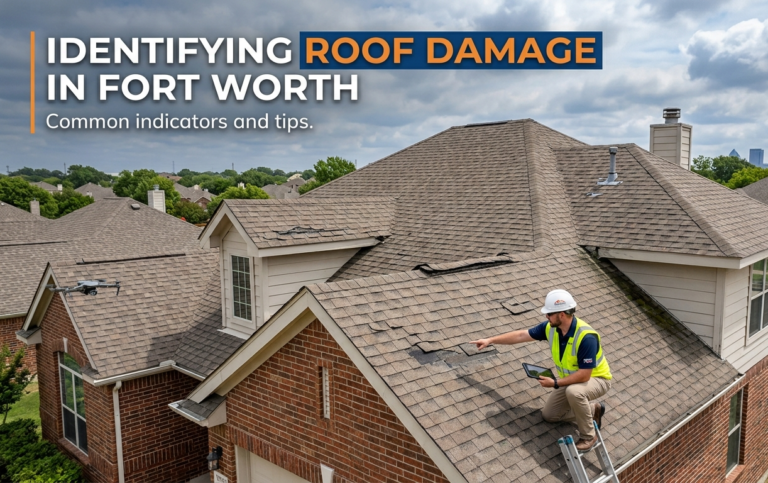
Are you noticing water stains on your ceiling or missing shingles after a recent storm? You are not alone. According to Roofing Contractor Magazine (IBHS Data), Texas recorded 878 major hail damage events in 2024 alone, making it the number one state in the country for severe weather related roof destruction.
For homeowners in North Richland Hills, TX, this means your roof faces constant pressure from high winds, excessive heat, and sudden downpours throughout the year. The good news is that most common roofing problems are fixable when you catch them early.
This guide walks you through every major issue Tarrant County homeowners deal with and what to look for before a small problem turns into an expensive one.
How Storm Damage Affects Roofs in North Richland Hills
Living in the DFW Metroplex means dealing with a humid subtropical climate that shifts between scorching heat in summer and freezing temperatures in winter. These temperature changes put serious stress on your roofing system over time.
Here is what severe weather typically does to roofs in North Texas:
- Hail damage cracks, dents, or loosens asphalt shingles and can also damage metal roofing panels and dented vents.
- High winds lift or tear off shingles, exposing the roof underlayment and creating paths for water infiltration.
- Fallen tree limbs cause roof punctures and crack roof decking underneath the surface.
- Heavy rain paired with clogged gutters forces water to pool, leading to fascia damage and foundation erosion.
- Freezing and thawing cycles cause thermal splitting in lower quality composition shingle materials.
Even after a moderate spring storm, hidden damage can sit undetected for weeks. That is why scheduling a thorough inspection right after bad weather is the smartest move you can make.
Damaged and Missing Shingles: The Most Visible Warning Sign
Cracked shingles, curling shingles, and loose shingles are the most obvious signs of roof deterioration. If you see granule loss collecting in your rain gutters or downspouts, it means your asphalt shingles are breaking down faster than expected.
- Worn shingles reduce your roof’s ability to block UV radiation and sun exposure.
- Broken shingles leave gaps that allow water leaks directly into your attic.
- Blistering shingles develop when poor ventilation traps heat underneath the roof deck.
Homes with roofs over 20 years old are three times more likely to file a wind or hail damage claim. If your aging roof shows these symptoms, a professional damage assessment can help you decide between a targeted shingle repair or a full roof replacement.
Roof Leaks and Water Damage: Silent but Costly
A roof leak does not always announce itself with a dramatic drip. Many homeowners only discover a leaky roof when they spot discolored patches on walls or smell mold growth in the attic. Intermittent leaks often appear only during certain wind driven rains, making leak source identification tricky without a trained eye.
Common causes behind persistent water damage include:
- Damaged flashing around chimneys, dormers, and skylights.
- Faulty seal on pipe boots and vent flashing connections.
- Blocked roof valleys where two slopes meet, trapping debris and moisture.
- Ponding water on flat roofing sections of commercial roofing properties.
Ignoring even a small leak invites mold and mildew, structural damage, and rotting wood in the rafter and fascia areas. North Richland Hills roof repair done early on these issues saves thousands in interior restoration costs.
Gutter Problems, Ventilation, and Flashing Failures
Your gutters and drainage system plays a direct role in roof longevity. When gutters clog with leaves and debris, water runoff backs up under the drip edge and damages the roof components beneath.
- Gutter repair and seasonal gutter cleaning prevent overflow and water damage to your siding and foundation.
- Attic ventilation and proper attic insulation regulate temperature and prevent mold growth from trapped moisture.
- Flashing replacement around the chimney, counter flashing, and ridge cap areas stops water from entering at joints.
- Skylight seal failures are a common overlooked source of chronic leaks in residential roofing.
Addressing ventilation and flashing early through routine inspections and preventive maintenance helps extend your roof lifespan by years.
When to Choose Roof Repair vs. Full Replacement
Not every problem requires a brand new roof. A solid repair plan from a licensed and insured contractor should outline whether targeted minor roof repairs will hold or if the damage calls for a complete roof replacement.
| Situation | Recommended Action |
| A few damaged shingles after a storm | Shingle replacement and sealant application |
| Ongoing roof leak with ceiling stains | Roof leak detection and flashing repair |
| Roof older than 20 years with visible wear | Comprehensive inspection and likely full roof replacement |
| Sagging rooflines or structural issues | Emergency roof repair and structural repair |
| Post storm impact damage on multiple areas | File insurance claims and get a detailed report |
Our team at Solutions Contracting works directly with your insurance adjuster to handle claims assistance, photo documentation, and the entire insurance process so you can focus on your family.
Protect Your Home Before the Next Storm Hits
Every North Richland Hills roof repair starts with knowing what to look for. From storm damage and cracked shingles to clogged gutters and poor insulation, each problem has a clear solution when caught in time. Regular inspections keep small fixes affordable and protect your property value for the long run.
Solutions Contracting provides free roof inspections, handles insurance claims, and delivers quality workmanship backed by 10+ years of experience right here in North Richland Hills. We offer financing options, 24/7 emergency response, and we are BBB A+ rated for your peace of mind.
Call us today at 682-469-9519 or get a free estimate to schedule your roof inspection before the next Texas storm season arrives.
Frequently Asked Questions
How do I know if my roof needs repair or full replacement?
If your roof is under 15 years old with only a few missing shingles or a small roof leak, a targeted repair usually works. But if you see widespread cracked shingles, sagging rooflines, or recurring water damage, a full roof replacement is the more cost effective long term option. A professional damage assessment gives you a clear answer.
Does homeowner insurance cover storm damage roof repair in North Richland Hills?
Most policies cover roof repair caused by hail damage, wind damage, or other sudden weather events. However, wear and tear or roof deterioration from lack of routine maintenance is usually not covered. Filing your claim quickly and having proper photo documentation helps maximize your insurance coverage.
What are the first signs of a roof leak I should watch for?
Look for water stains on ceilings, discolored patches on interior walls, dripping sounds during rain, or mold growth in the attic. Damaged flashing, faulty seal areas, and clogged gutters are the most frequent causes behind a leaky roof in North Texas homes.
How often should I schedule a roof inspection?
At a minimum, schedule a comprehensive inspection twice a year, once in spring and once in fall, plus after every major storm. Regular inspections catch granule loss, worn-out flashing, and early structural issues before they become expensive repairs.
What roofing materials last the longest in Texas weather?
Metal roofing, including standing seam and stone coated steel, lasts 40 to 70 years with routine maintenance. Clay tile and slate roofing can exceed 50 years. Standard asphalt shingles average 20 to 30 years, while impact-resistant shingles offer better protection against frequent hail damage in the DFW Metroplex.