Your roof does more than protect your home from the elements. It also plays an important role in managing attic heat, controlling moisture, and supporting your home’s overall energy efficiency. Choosing the right roof ventilation system can help maintain a healthier attic and protect your roofing materials over time.
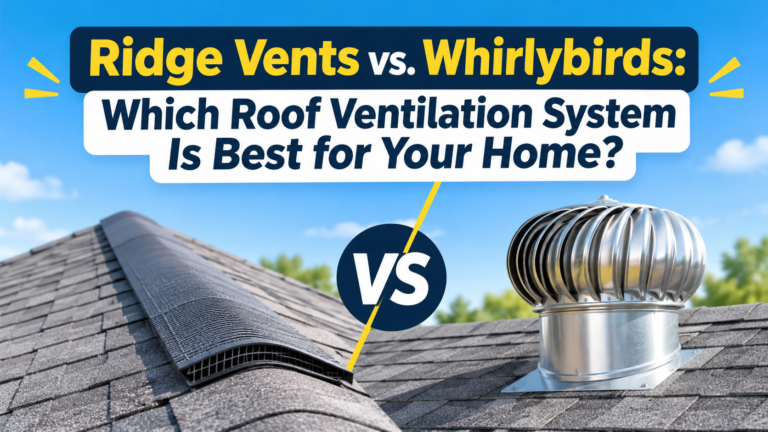
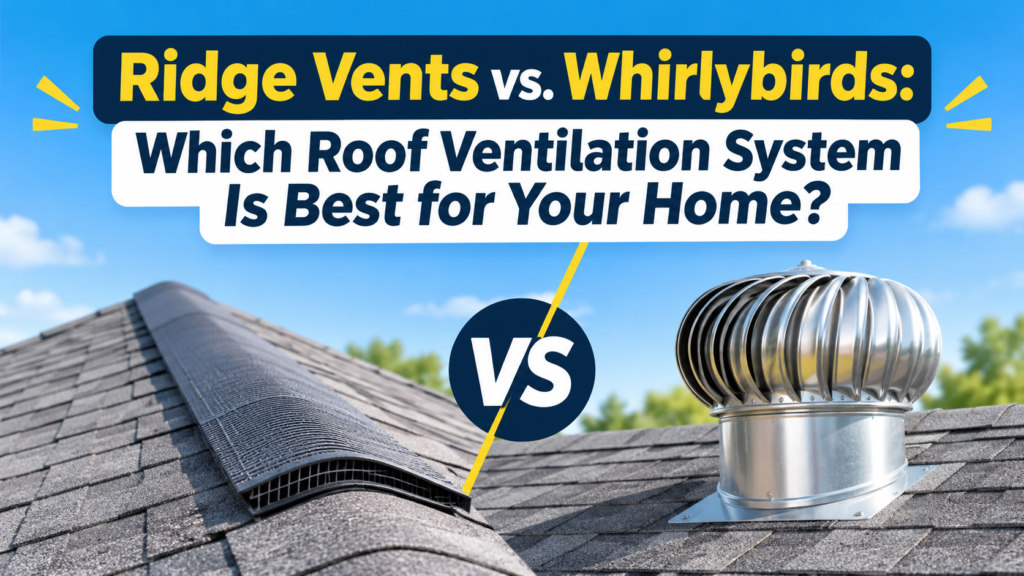
Two common options homeowners consider are ridge vents and whirlybirds, also known as roof turbines. Both help remove hot, humid air from the attic, but they work differently and offer distinct advantages depending on your roof design, ventilation needs, and budget.
According to the U.S. Department of Energy’s Consumer Guide to Durable Attics, improper attic ventilation can contribute to moisture buildup, insulation damage, and deterioration of wood components.
So, which system is right for your home? Understanding the differences between ridge vents and whirlybirds can help you make an informed decision.
What Is Roof Ventilation, and Why Does It Matter?
Roof ventilation allows outdoor air to move through the attic, helping remove excess heat and moisture. A properly designed system generally draws cooler air in through lower intake vents, such as soffit vents, and allows warmer air to escape through higher exhaust vents.
Effective attic ventilation can help:
- Manage attic temperatures: Reduce excessive heat accumulation beneath the roof.
- Control moisture: Help remove water vapor that could contribute to condensation, mold, or wood deterioration.
- Protect insulation and roofing components: Reduce the risk of moisture-related damage when ventilation is properly designed.
- Support energy efficiency: Work alongside adequate insulation and air sealing to help manage indoor temperatures.
- Promote roof durability: Help maintain a healthier attic environment over the long term.
However, ventilation alone cannot solve every roofing problem. Roof leaks, blocked intake vents, inadequate insulation, and air leakage from the living space may also need attention.
What Is a Ridge Vent?
A ridge vent is a low-profile ventilation system installed along the peak, or ridge, of a sloped roof. It typically runs continuously along the roofline and allows warm air to escape through a protected opening beneath the ridge cap.
As hot air rises, it can exit through the ridge vent while outdoor air enters through properly installed soffit or other intake vents. This creates a passive airflow pathway without requiring electricity or moving mechanical parts.
Benefits of Ridge Vents
1. Continuous ventilation along the roof peak
Unlike individual roof vents, a ridge vent can provide exhaust ventilation along much of the roof’s ridge. This helps distribute ventilation more evenly when the roof design and intake system support adequate airflow.
2. No moving parts
Ridge vents rely on natural airflow and pressure differences rather than a spinning mechanism. With no moving parts, there are fewer mechanical components to maintain.
3. A clean, low-profile appearance
Because ridge vents blend into the roofline, they are less noticeable than multiple raised roof vents. This can be appealing to homeowners who want a streamlined roof appearance.
4. Potentially better moisture management
When properly balanced with intake ventilation, ridge vents help warm, humid air escape from the attic. This can reduce moisture accumulation and protect vulnerable roofing materials.
5. No direct electricity requirement
Standard passive ridge vents operate without electricity, making them a practical option for homeowners looking for a ventilation system that does not require powered operation.
Potential Limitations of Ridge Vents
- Requires adequate ridge length: Homes with short, interrupted, or complex rooflines may not have enough usable ridge for effective installation.
- Depends on intake air: A ridge vent cannot perform well if soffit or eave intake is blocked by insulation, paint, or poor installation.
- Higher upfront installation complexity: Converting from other vent types may require closing gable vents or removing older exhaust vents.
What Is a Whirlybird or Roof Turbine?
A whirlybird is a round, wind-driven roof ventilator with rotating vanes. It is commonly installed on a roof slope and uses wind to spin the turbine, helping draw warm air out of the attic.
When wind is available, the turbine’s rotation helps exhaust attic air. Some airflow may also occur through natural convection, depending on the unit’s design and conditions.
Whirlybirds are often considered for existing homes because individual units can sometimes be added without replacing the entire roof. The number and placement required depend on the attic’s size, roof configuration, and the ventilator’s rated capacity.
Benefits of Whirlybirds
1. Wind-assisted exhaust
Wind turns the turbine, helping move air out of the attic. Its performance varies with wind speed, direction, surrounding obstructions, and the product’s design.
2. Flexible installation options
Individual turbines can be installed at suitable locations on many existing sloped roofs. This may be helpful when a continuous ridge vent is impractical.
3. No electrical connection for standard wind-driven models
Traditional whirlybirds use wind rather than an electric motor, so they do not require electricity to spin.
4. Useful for certain roof layouts
Where a roof has limited ridge length or an unusual configuration, a properly sized turbine system may provide a workable exhaust ventilation option.
Potential Limitations of Whirlybirds
- Wind-dependent performance: Turbines need wind to spin effectively; in calm conditions, they function mainly as static exhaust openings.
- Visible on the roof: The rotating dome is more noticeable than a low-profile ridge vent.
- Moving parts may need attention: Bearings and moving components can wear over time, unlike a passive ridge vent.
- Spot ventilation: Individual turbines ventilate specific locations rather than providing the continuous exhaust path of a ridge vent.
Ridge Vents vs. Whirlybirds: Key Differences
The right option depends on your home’s construction and ventilation requirements. The following comparison highlights the main differences.
| Feature | Ridge vents | Whirlybirds |
| How they work | Passive exhaust along the roof ridge | Wind-driven rotating turbine |
| Airflow pattern | Can provide continuous exhaust along the ridge | Exhaust through individual roof openings |
| Moving parts | None | Yes |
| Dependence on wind | Not dependent on turbine rotation; airflow still varies with weather and pressure | Wind assists rotation and exhaust |
| Roof appearance | Low-profile and integrated into the ridge | Visible raised units on the roof |
| Maintenance | Generally low; periodic inspection is still necessary | Moving components may need maintenance |
| Installation | Requires a suitable ridge and careful ridge detailing | Requires suitable locations and properly flashed penetrations |
| Best suited for | Compatible sloped roofs with balanced intake ventilation | Roofs where turbines are appropriate and a ridge vent is impractical |
Which Roof Ventilation System Is Better?
For many homes with a usable ridge and adequate soffit intake, ridge vents are often a strong option for compatible roof designs because they provide continuous, low-profile exhaust without moving parts. Whirlybirds may be useful when roof geometry or an existing ventilation layout makes a ridge vent less practical.
The quality of the overall ventilation design matters more than choosing a vent based on its name alone.
5 Factors to Consider When Choosing Roof Ventilation
Before choosing between ridge vents and whirlybirds, consider these five factors.
1. Roof Design and Structure
Your roof’s shape, pitch, ridge length, and attic configuration affect which ventilation systems will work effectively.
A simple gable roof may accommodate a continuous ridge vent, while a complex roof with multiple hips, valleys, and separate attic sections may require a more customized solution. A professional roof inspection can help determine the best vent locations and whether existing openings need to be modified.
2. Attic Size and Ventilation Requirements
A larger attic may require more net free ventilation area than a smaller one. Net free area refers to the actual unobstructed opening available for airflow, rather than the vent’s overall dimensions.
Ventilation requirements depend on applicable building codes, attic configuration, and the vent products selected. A roofing professional should calculate the required intake and exhaust capacity rather than relying solely on the number of vents installed.
3. Intake Ventilation
Both ridge vents and whirlybirds need an appropriate source of replacement air for effective attic ventilation.
Soffit vents are commonly used to bring outdoor air into the attic near the eaves. If insulation blocks those openings or the intake area is insufficient, airflow can be restricted.
The U.S. Department of Energy recommends pairing soffit ventilation with ridge vents for improved attic ventilation in suitable vented-attic designs. Read its Consumer Guide to Durable Attics for additional guidance.
Avoid combining different exhaust vent types without professional assessment. Poorly planned systems can create competing airflow paths and reduce the effectiveness of the intended ventilation strategy.
4. Texas Weather and Roof Durability
Texas homeowners must consider prolonged summer heat, humidity, heavy rain, and severe storms when evaluating roof ventilation.
Properly designed attic ventilation can help manage heat and moisture, but it is not a substitute for quality roofing materials, adequate insulation, air sealing, or weatherproof installation.
Any roof vent must be suitable for the roof system and installed with appropriate flashing and weather protection. After severe weather, damaged vent covers, loose components, or compromised flashing should be inspected promptly.
5. Installation Costs and Long-Term Maintenance
Your total cost depends on the roofing material, roof accessibility, number of vents, labor, and whether the existing roof needs minor repairs & sealing or modifications.
Ridge vents may be particularly convenient to install during a roof replacement, when ridge detailing can be incorporated into the project. Whirlybirds may be a practical option for certain existing roofs, although each unit creates a roof penetration that must be properly sealed.
Compare estimates based on the complete ventilation design, materials, installation quality, and expected maintenance, not just the initial price.
Can You Combine Ridge Vents and Whirlybirds?
Although both systems are designed to exhaust attic air, combining them is not automatically beneficial.
If ridge vents and roof turbines operate in the same attic, they may create competing exhaust paths. Depending on wind conditions and the layout, this can interfere with the intended airflow pattern and potentially draw air through unintended openings.
A balanced system should be designed around the attic’s required ventilation capacity, intake locations, and exhaust configuration. In many cases, selecting one primary exhaust strategy and ensuring adequate intake ventilation is the better approach.
Have a qualified roofing professional assess the existing system before adding another type of exhaust vent.
How to Know If Your Home Needs Better Attic Ventilation
Your attic may need attention if you notice:
- Excessive heat accumulates in the attic during warm weather.
- Musty odors or persistent dampness in attic spaces.
- Visible mold or mildew on attic surfaces.
- Wet or deteriorating insulation.
- Warped or rotting wood around the roof structure.
- Signs of water intrusion around roof vents or flashing.
These symptoms can have multiple causes. For example, a roof leak or bathroom exhaust fan discharging into the attic can create moisture problems even when vents are present.
The U.S. Department of Energy identifies wet insulation, mold, and damaged wood as possible signs of attic moisture intrusion. If you notice these conditions, arrange a routine inspection to identify the underlying cause before simply adding more vents.
Choose the Right Roof Ventilation Solution for Your Home
When comparing ridge vents vs. whirlybirds, consider the entire roof and attic system rather than focusing on a single component. Ridge vents offer continuous, low-profile exhaust without moving parts, while whirlybirds use wind-driven rotation and may suit certain existing roof configurations.
The best choice depends on roof design, attic size, intake ventilation, local weather exposure, installation requirements, and maintenance considerations.
If you are unsure which option fits your property, Solutions Contracting can help you evaluate your roof’s condition and identify potential improvements as part of your roofing project.
Explore our residential roofing services or schedule a roof inspection and request a free estimate. A properly evaluated roofing system can help you make informed decisions about ventilation, moisture control, and long-term roof performance.
Protect your roof from the top down with a ventilation plan designed for your home.