
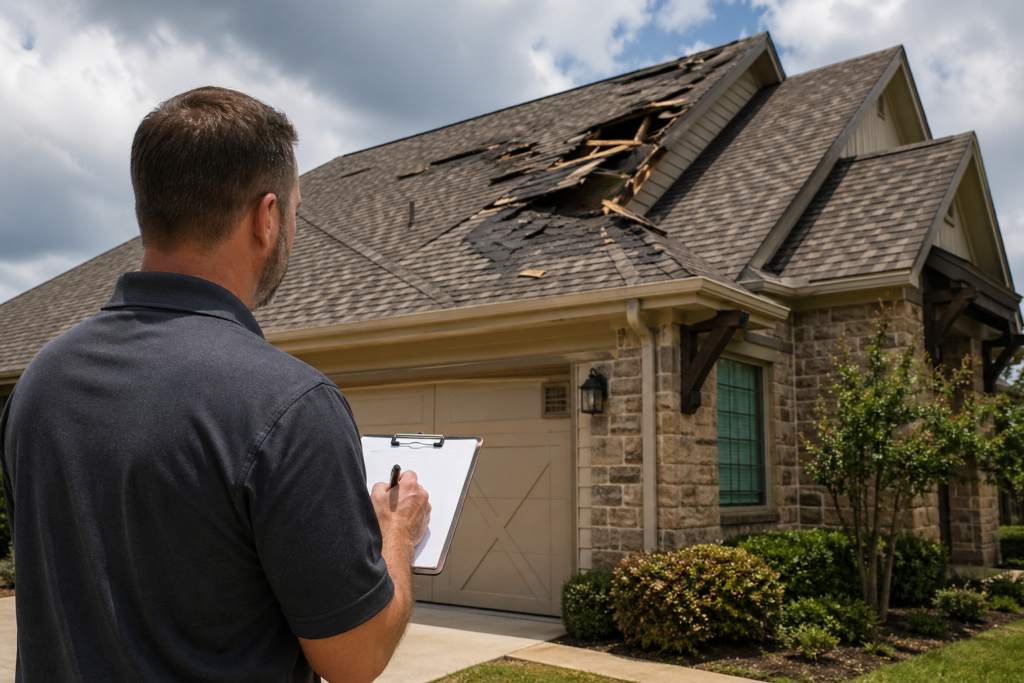
Are you wondering why your roof insurance claim is still open weeks after a storm? Most Texas homeowners expect a quick resolution, but the full process usually runs 3 to 8 weeks for standard claims and up to 3 months or more when disputes or supplements arise.
According to the Texas Department of Insurance (TDI), your insurer must acknowledge your claim within 15 business days and make a payment decision within 15 business days after receiving all required information. That legal window is just the start. Insurance claim timelines (Texas) depend heavily on what your policy says, how well you document damage, and how fast you move through each stage.
Your Insurance Policy Sets the Clock Before You Even File
Many homeowners only read their insurance policy after damage happens. By then, some deadlines are already closing. Your homeowners insurance policy defines your coverage type, deductible amount, and the exact window to report damage. Most Texas insurance policies require filing within 12 months from the date of loss (DOL). Some carriers require prompt notice within 30 to 60 days, or your claim risks denial. Knowing these terms before a storm hits saves you from losing coverage you paid for.
Two key coverage types determine your payout structure:
- Replacement Cost Value (RCV) pays the full current cost to repair or replace your roof.
- Actual Cash Value (ACV) subtracts depreciation based on your roof’s age and condition.
- Wind and hail deductibles are often separate and percentage-based, not a flat amount.
- Check your insurance declaration page to confirm whether you carry recoverable depreciation or not.
- ACV policies pay faster but less. RCV policies pay more but require a two-step payment process.
Steps in the Roof Claim Process in Texas
Understanding the steps in the Roof Claim Process in Texas removes the guesswork and keeps you in control. Each step has a natural sequence, and skipping any one of them often triggers delays or reduced payouts.
- Step 1: Get a professional roof inspection within 2 to 3 days of the storm.
- Step 2: Collect photo documentation, videos, and a storm history report to verify the date of damage.
- Step 3: Review your insurance policy for coverage exclusions, deductibles, and the filing deadline.
- Step 4: Contact your insurer to start filing a Texas Roof Claim and receive your claim number.
- Step 5: Schedule the insurance adjuster visit and have your roofing contractor present on-site.
- Step 6: Review the settlement offer line by line for missing damage items or incorrect measurements.
- Step 7: Your contractor submits supplements for any hidden damage, code upgrades, or overlooked scope of work.
- Step 8: Work gets completed, final invoice submitted, and recoverable depreciation funds are released.
Having a contractor at the adjuster inspection is critical. It prevents your claim from being closed with incomplete assessments and saves you from discovering gaps later.
Insurance Claim Timelines (Texas): What the Law Says and What Reality Looks Like
Texas law under the Texas Prompt Payment of Claims Act (Texas Insurance Code Chapter 542) sets firm deadlines for insurers. Your company can request a 45-day extension only if they notify you in writing with a valid reason. If they miss any statutory deadline, you may be entitled to 18% annual interest as a penalty plus attorney fees. That said, legal minimums rarely reflect how long insurance claim timelines (Texas) actually run in practice.
Here is what affects real-world claim duration beyond the legal framework:
- Post-storm backlogs push adjuster inspection appointments out by 2 to 3 weeks in the DFW area.
- Internal desk reviews happen behind the scenes and create unexplained pauses in your claim.
- Supplement requests for missed damage add an average of 2 to 4 additional weeks to approval.
- Claims involving bad faith disputes or denied claims can extend timelines by several months.
- The final payment on RCV policies only releases after the completion certificate is submitted.
Filing a Texas Roof Claim Without Leaving Money Behind
Filing a Texas Roof Claim is not just about calling your insurer. It is about how well you prepare before, during, and after that call. Mistakes made early in the process directly reduce your payout or push your date of claim into a denial zone.
Common errors that cost Texas homeowners thousands:
- Waiting too long after the storm event to inspect or notify the insurer.
- Starting repairs before the adjuster inspection, removing evidence insurers need.
- Hiring storm chasers who lack RCAT licensing or a local physical presence.
- Not reviewing the estimate for cosmetic damage labels that exclude real structural repairs.
- Skipping supplements when underlayment, decking, or drip edge damage exists but was not included.
- Ignoring policy exclusions around normal wear and tear or gradual deterioration.
One practical tip: always request a second opinion inspection from a licensed roofing contractor if the adjuster’s estimate feels low. Real storm damage often hides in areas the adjuster does not access from the ground.
When the Steps in the Roof Claim Process in Texas Stall
Sometimes the steps in the Roof Claim Process in Texas simply stop moving. Your claim feels stuck, no updates arrive, and calls go unanswered. This happens more often than insurers admit. During high-volume storm seasons across North Texas, Dallas-Fort Worth, and Central Texas, adjusters carry massive caseloads and files enter internal queues with no visible movement for homeowners.
Here is what you can do right now:
- Call TDI’s Help Line at 800-252-3439 to file a formal complaint about missed deadlines.
- Request written documentation of every delay reason from your insurer.
- Hire a public adjuster to independently review your claim and negotiate on your behalf.
- Consult a Texas property damage attorney if bad faith insurance tactics are involved.
- Keep a communication log with dates, names, and call notes to support any legal action.
Solutions Contracting works directly alongside homeowners through every phase of this process. We help clients in Fort Worth, Arlington, Plano, Garland, Irving, and surrounding DFW areas avoid the mistakes that cost real money.
Stop Waiting. Get the Roof You Deserve, the Right Way.
Your storm-damaged roof is not just a repair job. It is a financial and safety matter that deserves the right attention at every step. Insurance claim timelines (Texas) are manageable when you document properly, file on time, and work with a contractor who knows the process inside out.
Your insurance policy is a legal contract, and you have every right to the full payout it promises. If you are in Dallas-Fort Worth and need a free roof inspection or guidance on filing a Texas Roof Claim, reach out to Solutions Contracting today at 682-469-9519 or email info@scroofingtx.com. Our team is ready 24/7 for storm response, inspections, and complete claims process support from day one to claim closure.
Frequently Asked Questions
1. How long does a roof insurance claim take in Texas on average?
Most standard claims resolve in 3 to 8 weeks from the filing date. Complex claims involving supplements, disputes, or denied claims can take 2 to 3 months or longer. Filing quickly with complete documentation is the single fastest way to shorten your timeline.
2. What is the one-year filing deadline in Texas?
The one-year filing deadline means most Texas policies require you to report damage and file within 12 months from the date of loss. Some carriers also include a prompt notice clause requiring contact within 30 to 60 days of damage. Always check your specific insurance policy language first.
3. What is the difference between ACV and RCV for a Texas roof claim?
Actual Cash Value (ACV) pays the depreciated value of your roof at the time of damage. Replacement Cost Value (RCV) pays the full cost of a new equivalent roof. RCV policyholders receive a partial check upfront and a second check after work is completed and invoiced.
4. Can my Texas roof claim be denied if I waited too long?
Yes. Insurers may deny your claim if prompt notice requirements were not met or if the delay created arguments about pre-existing damage. A licensed roofing contractor can help you document the true date of damage using storm history reports and weather data to defend your timeline.
5. Should I have a roofing contractor present during the adjuster inspection?
Absolutely. Having your roofing contractor on-site during the adjuster inspection ensures all damage areas are identified, including hidden damage in underlayment and decking. Contractors familiar with Texas insurance claim processes can point out items adjusters miss from ground level, directly improving your settlement offer.