By the time a tenant reports a ceiling drip, water may already have spread through the roof insulation. Do you know whether your flat roof is TPO or PVC, and whether that changes how the leak gets fixed?
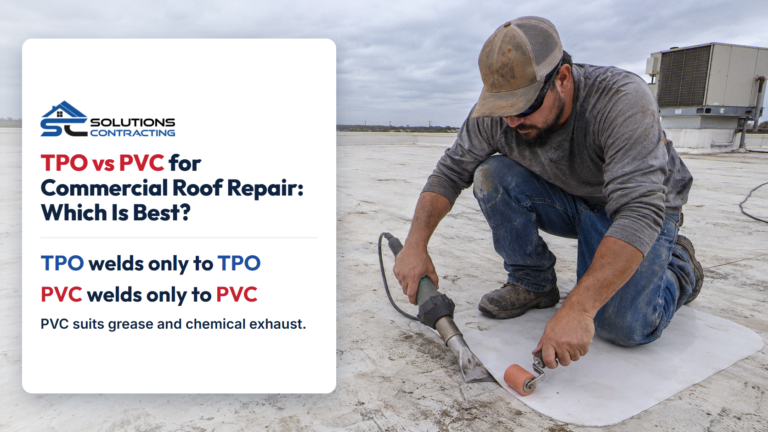
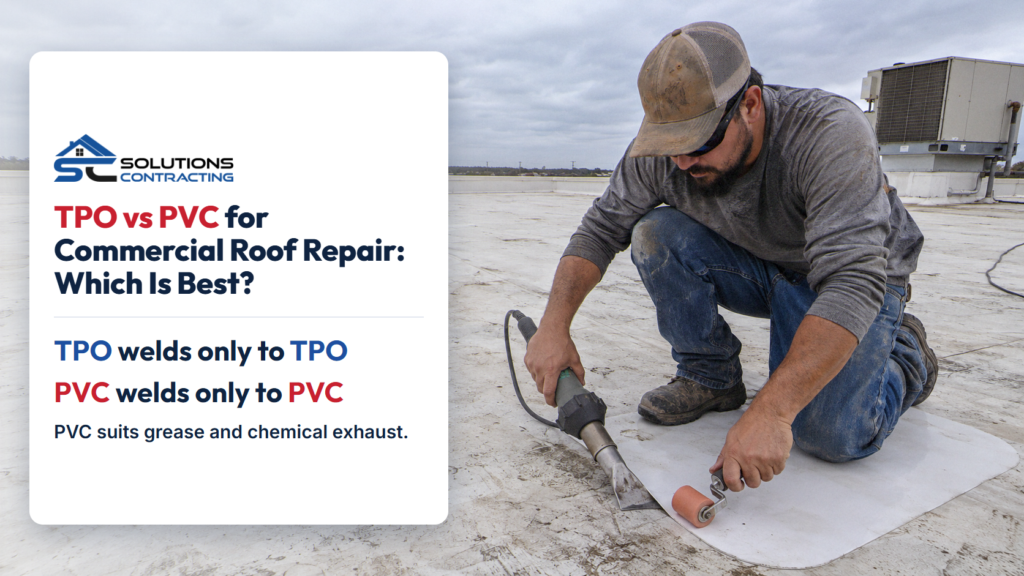
The first TPO vs PVC question is which membrane covers the building, because the existing sheet determines which patch will hold. Each membrane heat-welds only to its own type, so a matching patch is the only way the seam can fuse.
For the next roof, the choice depends on what goes on inside the building and what reaches the roof. PVC is often better suited to grease and chemical exhaust, while TPO works well for many offices, warehouses and stores.
In Dallas-Fort Worth, the normal August high reaches 95.8°F, according to the National Weather Service. In the NWS climate record, the normal January low is 36.1°F at the same location. Across that seasonal swing, roof edges and seams go through repeated cycles of expansion and contraction.
As a roofing contractor in Fort Worth, Solutions Contracting repairs and installs both membranes on commercial buildings across Dallas-Fort Worth.
What TPO and PVC Roofing Membranes Are
TPO and PVC are single-ply thermoplastic membranes, which means a single layer of flexible sheets waterproofs the roof. Roofers heat-weld overlapping sheets, using hot air to soften the material and fuse the layers along the overlap. The resulting hot-air welded seams connect the sheets into a continuous surface that sheds water toward the drains.
- TPO (Thermoplastic Polyolefin): TPO blends polypropylene with ethylene-propylene rubber, and its roofing sheets follow the material requirements in ASTM D6878. Manufacturers can make TPO flexible without plasticizers, and white TPO is often a lower-cost option for commercial flat roofs.
- PVC (Polyvinyl Chloride): PVC is a vinyl membrane that gets its flexibility from additives called plasticizers and follows the sheet specification ASTM D4434. Many owners pay more for PVC where grease, oil or chemicals are part of the building’s daily operation.
TPO vs PVC Roofing Comparison for Commercial Buildings
In a TPO vs PVC comparison, the biggest differences show up around exhaust equipment and as the sheets age.
| Feature | TPO | PVC |
| Material | Polypropylene and rubber blend | Vinyl with plasticizers |
| Seams | Hot-air welded | Hot-air welded |
| Grease and chemical resistance | Moderate | High |
| Reflectivity when clean | High in white | High in white |
| Welding an aged sheet | Needs careful surface prep | Usually welds more easily |
| Main aging concern | Surface weathering | Plasticizer loss and shrinkage |
| Best fit | Offices, warehouses, retail | Restaurants, food plants, industrial |
According to Angi, installed TPO runs $4.50 to $16 per ft², while PVC runs $5 to $15 per ft². Roof size, insulation, removal work and rooftop details can have more effect on the bid than the membrane choice. When comparing bids, check that both include the same insulation work and repairs around drains and rooftop equipment.
How to Tell if a Commercial Roof Is TPO or PVC
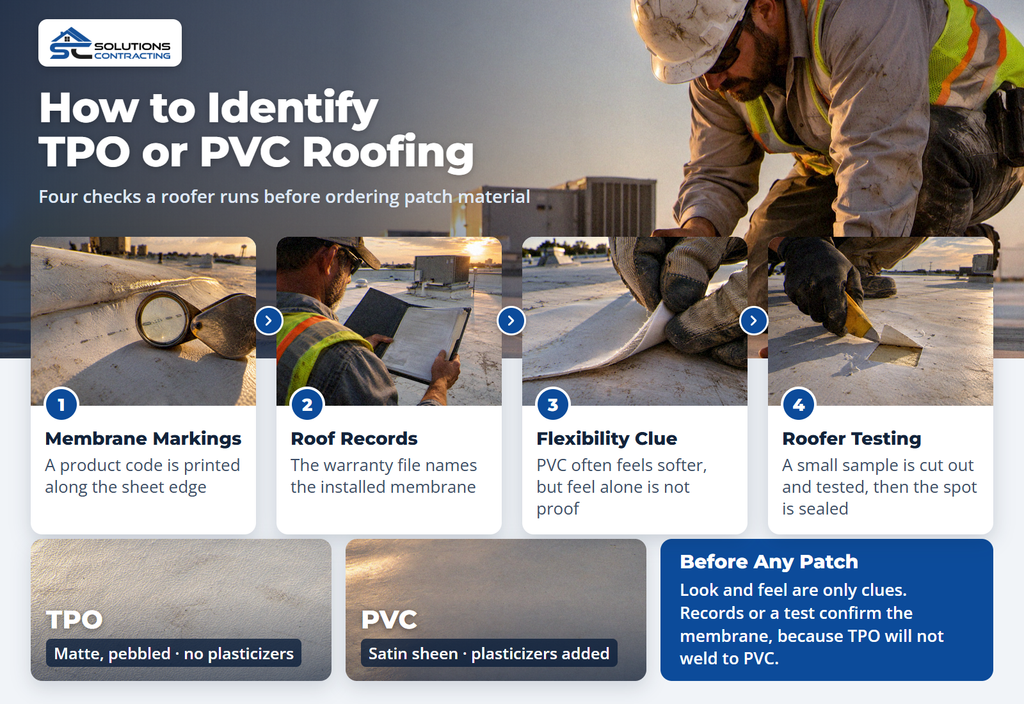
White TPO and white PVC look much alike from the roof hatch, and color alone can’t confirm which sheet to order. A roofer starts with the paperwork, then checks the membrane on the roof if records are missing or unclear.
- Roof Records: Start with the original contract, warranty certificate or closeout file, which often lists the membrane type, manufacturer and thickness. If the paperwork covers more than one roof section, match the product information to the area that needs repair.
- Membrane Markings: The roofer looks for product information printed near sheet edges, where the sheets overlap or meet at seams. When the print has faded in exposed areas, a protected overlap under the flashings may still hold a readable marking. Flashings seal roof edges and openings around equipment, pipes and other features that interrupt the main roof surface.
- Feel and Flexibility: PVC often feels softer, while older TPO may feel stiffer and slightly waxy when the roofer handles the sheet. Age and thickness change how either material feels, so flexibility gives the roofer a clue to check against other evidence.
- Small Test Sample: If the other checks leave questions, the roofer can take a small sample for identification and patch the opening. Tetrahydrofuran, or THF, softens PVC and once served as a solvent for joining PVC seams. TPO reacts differently, and testing the sample can help the roofer confirm which membrane is on the building.
During a commercial roofing inspection, Solutions Contracting confirms the membrane type before deciding which repair materials suit the roof. If the roof is under warranty, ask the roofer to check which repair materials and methods the manufacturer allows. Matching the membrane type helps the patch bond, and following the warranty terms helps protect the coverage you have.
How TPO and PVC Roof Repairs Differ
A welded repair starts with a compatible patch, and the condition of the old sheet determines how much preparation the weld needs.
Repairing a TPO Roof
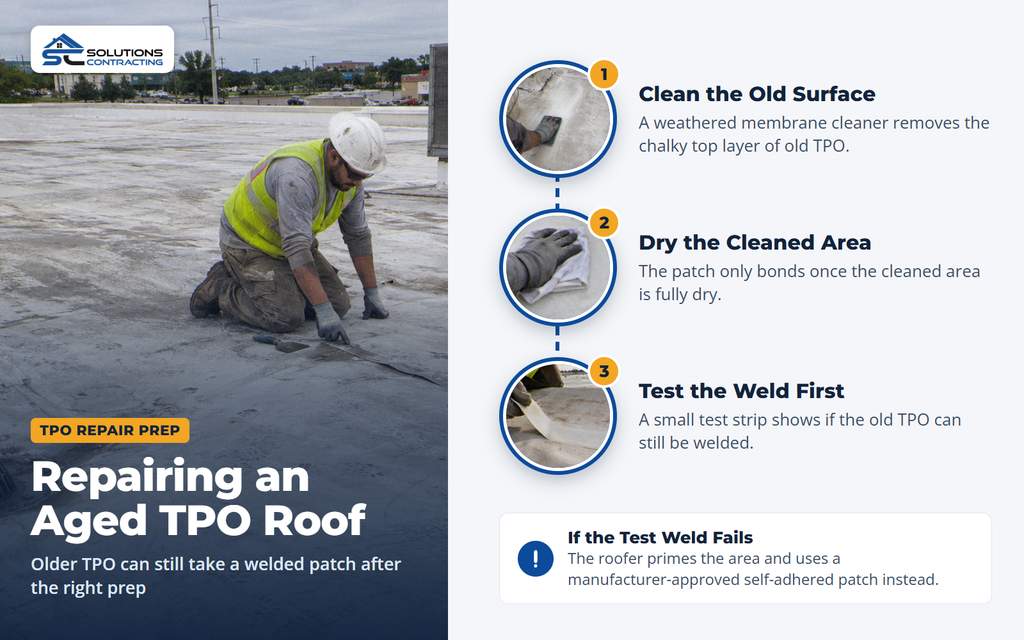
TPO can oxidize after years of exposure to air and sunlight, changing the surface and making welding harder. The roofer scrubs away dirt and the weathered layer with the approved weathered membrane cleaner, then lets the area dry. A small test weld helps the roofer see whether the prepared surface can hold a patch over the damage.
If the weld won’t hold, a manufacturer-approved self-adhered patch may be an option after the roofer applies the specified primer. The primer prepares the surface for the adhesive backing, which holds the patch in place without a welded seam.
Repairing a PVC Roof
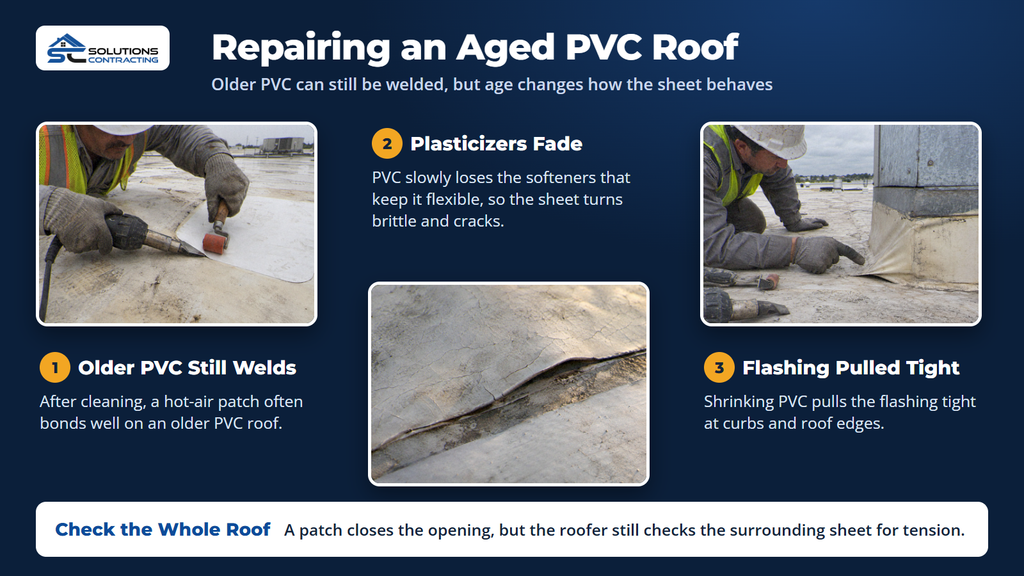
Older PVC often takes a hot-air patch after cleaning, provided the sheet still has enough flexibility and takes a test weld. Plasticizer loss means the additives that keep PVC flexible have diminished, leaving the sheet more brittle and prone to shrinkage.
As PVC shrinks, the sheet can pull flashings tight at roof edges or curbs, the raised frames around rooftop equipment. A patch can close the opening, but the roofer still needs to check the surrounding roof for tension.
The Repair Steps Both Membranes Follow
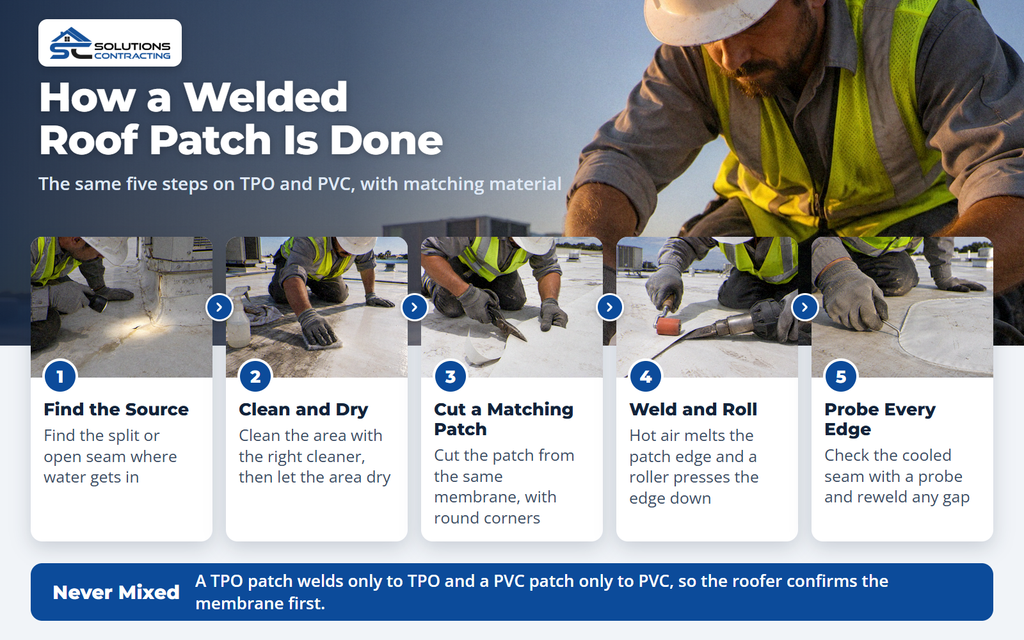
The National Roofing Contractors Association patch steps start with a clean surface and end with a weld check.
On a typical welded repair, a Solutions Contracting crew follows these five steps and adjusts the preparation to the membrane.
- Find the Source: The roofer traces the leak indoors, then checks nearby seams, curbs and drains because water can travel beneath the sheet.
- Clean and Dry the Area: The crew scrubs and rinses away dirt, dries the repair area and uses the cleaner specified for that membrane.
- Cut a Matching Patch: The roofer rounds the corners and leaves enough overlap on every side to form a continuous weld around the damage.
- Heat-Weld and Roll: A handheld welder softens the overlap while the roofer uses a silicone roller to press the sheets together.
- Probe Every Edge: After cooling, the roofer runs a rounded tool along the seam to feel for gaps before leaving the roof. During the probe check, the roofer marks any gaps for repair. Where the manufacturer requires edge sealant, the roofer seals the exposed reinforcing fabric so water can’t wick inside.
TPO vs PVC: Which Is Best for Commercial Roof Repair?
The existing sheet determines the patch, and the building’s daily operations guide membrane selection when replacement comes due.
- Restaurants and Food Service: PVC is usually the better fit around kitchen exhaust because grease can soften and swell TPO over time. If several restaurants share a roof, owners may choose PVC across the whole building to cover each exhaust area.
- Offices, Warehouses and Retail: TPO offers a reflective, weldable surface and often costs less if little oil or chemical residue reaches the roof.
- Apartments and Condominiums: Both membranes can work for multi-family roofing, depending on the equipment, the budget and how often maintenance crews need roof access.
Reflectivity measures how much sunlight a surface sends back, and clean white membranes of either type can reflect a large share. According to ENERGY STAR, a clean white roof that reflects 80% of sunlight stays about 50°F cooler on a summer afternoon. That comparison is against a grey roof reflecting only 20%, which shows why dirt on a white membrane matters.
Regular cleaning helps preserve a white membrane’s reflectivity, and seam checks can catch openings before the next rain. Use the roof maintenance checklist to see what a visit should cover, including drain clearing and checks around old repairs. Ask Solutions Contracting to schedule preventive roof maintenance around tenant hours so your team can plan access with less disruption.
When to Repair, Coat or Replace a TPO or PVC Roof
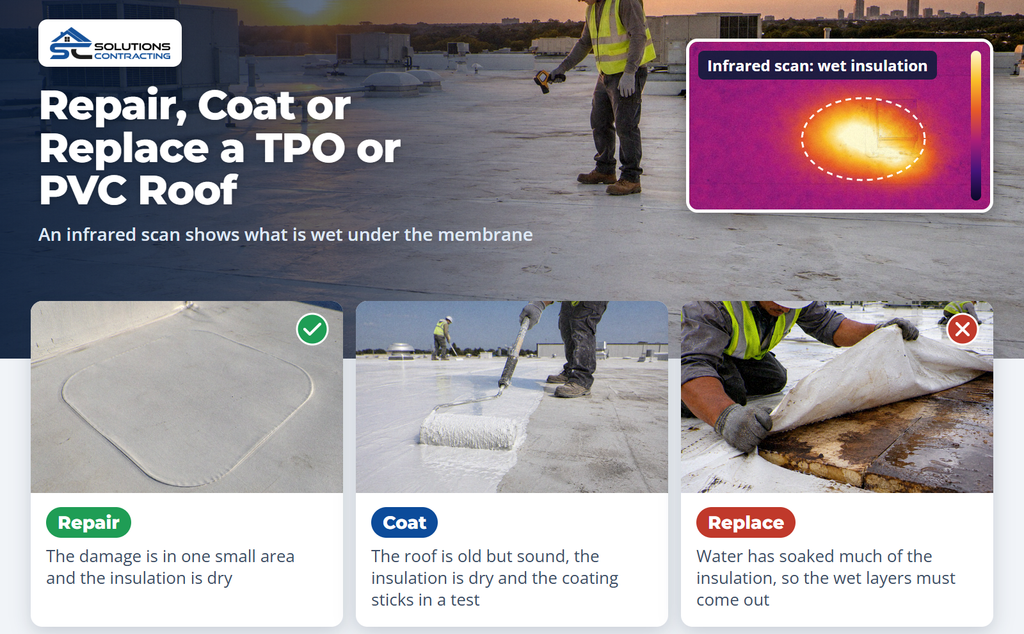
During a leak investigation, Solutions Contracting crews use infrared scans to map temperature differences that may indicate wet insulation. If a scan flags a suspect area, the roofer can take a small sample to check whether the insulation is wet.
- Repair: A targeted patch makes sense when the sheet remains flexible, the insulation is dry and the leaks trace back to a few spots.
- Coat: A silicone roof coating can restore an aging TPO or PVC roof that remains sound, dry and firmly attached. The crew repairs defects, cleans the roof and tests how well the coating bonds before going ahead with restoration.
- Replace: Ask for a replacement estimate when wet insulation is widespread, the membrane cracks when folded or flashings repeatedly pull loose.
If the roof still qualifies for restoration, Solutions Contracting can extend its service life while limiting disruption to tenants. For roofs that need replacement, we install both membranes as part of our flat roofing systems.
A recover adds a new roof over suitable existing layers, while a full tear-off removes the old assembly before rebuilding. The existing layers and local code requirements help determine whether a recover is an option for your building.
What We Found and How We Fixed It
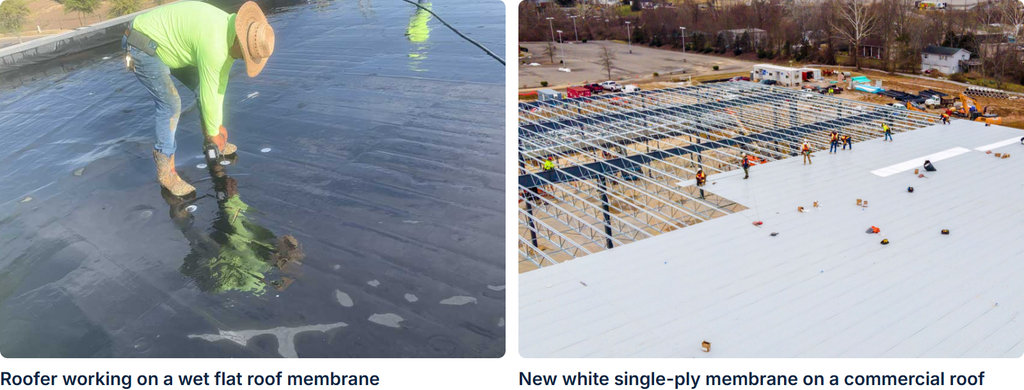
Solutions Contracting crews take before and after photos so owners have a record of the damage and completed work. Keep the photos with the roof plan, product details and repair dates so the next crew can find the work. Before signing a repair contract, include how the crew will document the work among the questions to ask a commercial roofer.
Choose the Right TPO or PVC Repair Before the Next Storm
The TPO vs PVC repair decision starts with a matching patch, proper surface preparation and a clear diagnosis of the leak. Ask for those details in writing so you can compare a targeted repair with restoration or replacement when budgeting.
An active leak can keep spreading beneath the membrane while roofing crews field more calls during North Texas storm season. Booking an inspection early gives your team time to coordinate roof access and put urgent work on the schedule.
Call Solutions Contracting at 682-469-9519 or request a commercial roof repair inspection to confirm the membrane and assess the damage. Our team will photograph the problem areas and provide a written repair plan before any roofing work begins.
Frequently Asked Questions
1. Will TPO Weld to PVC?
TPO and PVC have different chemical compositions, so a direct heat weld between the two won’t form a reliable seam. A repair needs a patch of the same membrane type, and where the two membranes meet, the roofer uses a transition detail the manufacturer approves.
2. Is PVC More Expensive Than TPO?
PVC sheet material often costs more because owners are paying for better resistance to grease, oils and many chemicals. Installed prices overlap in the TPO vs PVC cost comparison from Angi. TPO runs $4.50 to $16 per ft², while PVC ranges from $5 to $15 per ft² installed.
3. How Long Does a TPO or PVC Roof Last?
Most commercial flat roofing systems last 15 to 30 years, depending on the material, the installation quality and regular maintenance. Regular inspections and prompt repairs give either membrane a better chance of reaching the upper end of that range.
4. Can a TPO or PVC Roof Be Coated Instead of Replaced?
Many older roofs qualify for coating if the existing membrane remains firmly attached and the insulation underneath is dry. The roofer selects a coating approved for the membrane and tests a small area for adhesion before pricing the job.
5. What Should I Do If a TPO or PVC Roof Leaks After a Storm?
Photograph visible damage from a safe spot and move equipment clear of the leak if the area is safe to enter. The Solutions Contracting emergency storm response team can provide temporary protection and document roof damage for the insurance claim.