Did the last hailstorm leave your building looking fine from the parking lot, so nobody checked the roof? According to the Insurance Information Institute, State Farm alone paid over $5.6 billion in hail claims in 2025. Texas topped State Farm’s list of states for hail claims, so DFW owners have good reason to check their roofs.
A commercial roof insurance claim in Dallas-Fort Worth is usually lost or reduced for simple reasons, not bad luck. Many owners report damage too late, keep no roof records or start repairs before the adjuster arrives. Others misread the deductible or let the wrong contractor steer the claim from the very first phone call.
This guide explains those mistakes and what building owners, property managers and facility managers can do to avoid them. At Solutions Contracting, we inspect DFW commercial roofs after storms, so we understand the documentation owners need alongside repair plans.
Why Commercial Roof Claims in DFW Get Reduced or Denied
Commercial property insurance pays for sudden damage from a covered event such as hail or wind, not gradual roof deterioration. That distinction explains many disputes, because the adjuster must separate storm damage from age, ponding water or earlier maintenance problems.
If your building looks undamaged from below, a flat roof can still have hail damage to its membrane or coating. Large buildings also have bigger deductibles, more rooftop equipment and more people involved, from tenants to asset managers.
After a major DFW hailstorm, adjusters can be handling many claims at once across the whole metro area. A well-organized roof file helps owners get a clear and fair claim decision during that busy period. The following five mistakes show where that process commonly goes wrong and what owners can do at each stage.
Mistake 1: Waiting Until the Roof Leaks to Report Hail Damage
Many owners wait for a ceiling stain before arranging an inspection, especially if tenants have not reported any water inside. However, hail can fracture a TPO membrane, crack a coating or dent metal panels without causing a leak for months. By then, the insurer can fairly question whether the water came from that storm, a later storm or wear.
These signs of hail damage on commercial roofs deserve attention even if the building has not started leaking:
- Membrane and Coating Damage: Small fractures, punctures or crushed spots can affect TPO, PVC or EPDM membranes on flat commercial roofs. An existing roof coating may also show fresh cracks or chips where the hailstones hit the surface.
- Metal Roof Dents: Dents can affect R-panels, ridge caps and edge metal, and fasteners and seams can loosen over time.
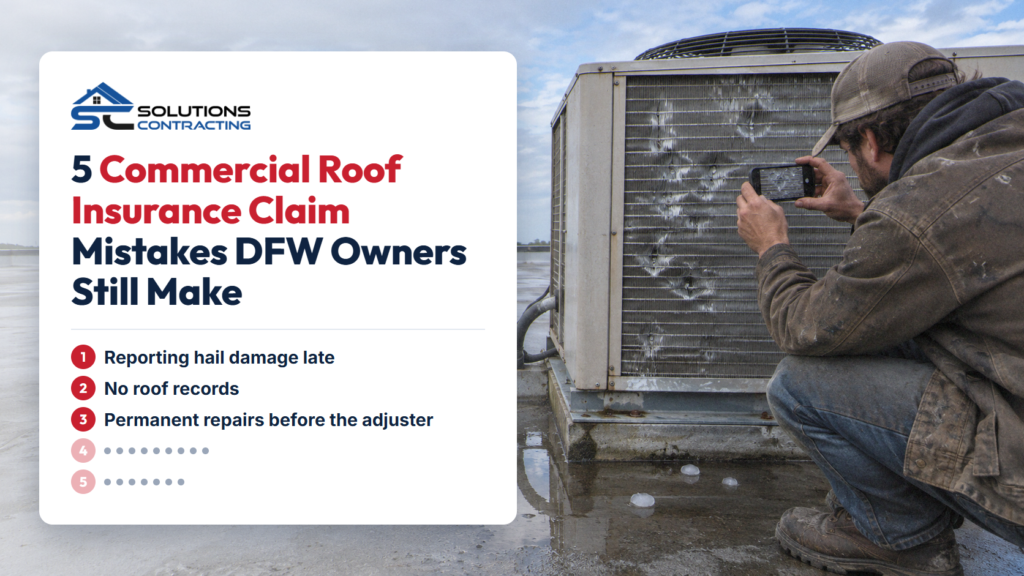
- Rooftop Equipment Damage: Flattened HVAC condenser fins, dented vent caps and cracked skylights also help document how large the hail was.
- Modified Bitumen Granule Loss: Fresh granule loss can expose the underlying asphalt on modified bitumen, often leaving loose granules near drains and downspouts.
Report the loss as soon as you suspect damage, because the insurer’s Prompt Payment response clock starts with notice. Under Texas Insurance Code §542.055, an insurer generally must acknowledge the claim and begin investigating within 15 days of notice. Within that same window, the insurer must also request the items, statements and forms it needs from you.
Our Texas roof claim timeline explains the later steps and Prompt Payment deadlines in more detail for owners. A late report may not end a claim, but it can make proving the damage date harder for the owner.
Public records, such as the hail reports in NOAA’s Storm Events Database, can confirm the storm date. Solutions Contracting inspects commercial roofs after major DFW storms, so owners know quickly whether there is damage worth reporting.
Mistake 2: Having No Roof Records From Before the Storm
When an adjuster calls damage “pre-existing” or “wear and tear,” the owner needs proof of the roof’s earlier condition. Without dated records, it becomes your word against the adjuster’s report, and the adjuster’s report usually wins.
Keep the following records together so your property team can find the roof’s history without searching through separate files:
- Inspection Reports: Keep dated reports with photos of the membrane, seams, flashing, drains and rooftop equipment, ideally from spring and fall inspections.
- Repair Invoices: Record every past repair and its roof location, so the adjuster can distinguish a new leak from an old patch.
- Warranty and Installation Papers: Save the roof system details, installation date and coating or membrane warranty, since age affects the insurer’s valuation.
- Drain and Maintenance Logs: Document drain, scupper and gutter clearing, so the file answers questions about ponding water before the storm.
A preventive maintenance program from Solutions Contracting builds this file for you, with written reports after each visit. Owners who keep these files tend to settle claims with fewer delays, because adjusters spend less time guessing.
If an adjuster finds wear instead of storm damage, a silicone roof coating may still restore a sound roof. That restoration usually costs far less than a full replacement and adds years to the existing roof.
Mistake 3: Making Permanent Repairs Before the Adjuster Inspects
After a storm, owners understandably want repairs finished quickly, especially if tenants report leaks that could interrupt their daily operations. The Texas Department of Insurance advises policyholders to prevent more damage and save every receipt for that work. TDI also advises keeping damaged items until the insurance company says those items can safely be thrown away.
Temporary repairs protect the building while preserving evidence, whereas permanent repairs can remove the damage before the adjuster inspects it. Tarps, temporary patches and water extraction protect the property, and policies often cover this work to prevent further damage. However, a full tear-off or new coating before inspection can erase the evidence needed to assess the claim.
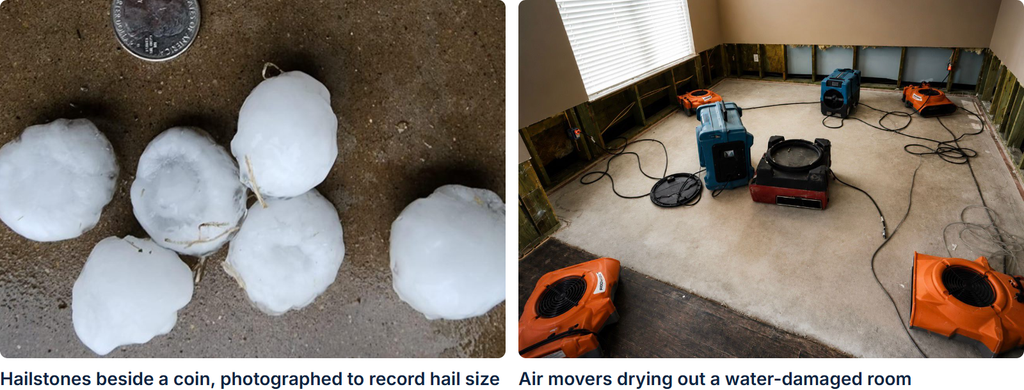
- Photograph First: Take wide and close photos of the roof, ceiling and wet inventory before anyone moves items or patches damage.
- Keep Samples: Retain damaged ceiling tiles, wet insulation or removed membrane pieces until the adjuster confirms that you can discard them.
- Track Every Cost: Save every invoice for tarps, water mitigation and emergency labor, since these costs add up quickly during cleanup. Many commercial policies pay for reasonable temporary repairs that protect the building from further water damage after a covered storm.
- Notify Tenants: Ask tenants to report damaged inventory or equipment to their own insurers as soon as possible after the storm. The building policy usually covers the building itself, while tenant property falls under each tenant’s own policy.
Solutions Contracting crews handle temporary commercial roof repairs that stop water without destroying the evidence your adjuster needs. Our team also photographs the damage before and after every step, so the claim file stays complete.
Mistake 4: Not Knowing the Deductible and Payout Terms in the Policy
A commercial policy often gets its first full read after a storm, when the deductible and payment terms surprise owners. Before approving work, ask your agent to explain the terms below and what they mean for the building’s repair budget.
| Policy Term | What It Means | Question to Ask Your Agent |
| Percentage Wind/Hail Deductible | The deductible is a percentage of the building’s insured value, not a flat dollar amount | What is my deductible in dollars for this building? |
| Actual Cash Value (ACV) | The payout subtracts depreciation for the roof’s age and condition | Is my roof covered at ACV or replacement cost? |
| Replacement Cost Value (RCV) | The insurer pays depreciation back after the work is finished | What proof do you need to release the holdback? |
| Cosmetic Damage Exclusion | Dents that do not let water in, often on metal roofs, may not be covered | Does my policy exclude cosmetic hail damage? |
| Ordinance or Law | Pays for upgrades the building code requires during repairs | Is code upgrade coverage included, and up to what limit? |
If the policy has a percentage wind/hail deductible, confirm its dollar amount before setting the repair budget. For example, a 2% deductible on a building insured at $2 million means the owner pays the first $40,000. Solutions Contracting can measure the roof and document its age and condition for you and your agent.
One Texas rule ties these terms together, and owners on replacement cost policies should know it before filing. Texas Insurance Code §707.004 lets an insurer hold back recoverable depreciation until reasonable proof of deductible payment or financing arrives.
Mistake 5: Letting the Wrong Contractor Steer the Claim
The fastest way to damage a claim is hiring a roofer who promises to “take care of everything.” Texas Insurance Code §707.002 requires the insured to pay the deductible, so no roofer can legally promise to cover it. A seller who waives it without the insurer’s consent commits a Class B misdemeanor under Business & Commerce Code §27.02.
Texas also stops a contractor from taking over claim negotiation, even when the company understands roofing damage well. Under Texas Insurance Code §4102.163, no contractor may act as a public adjuster on property it services or may service.
If you need someone to negotiate, Texas requires a public adjuster licensed by the state under §4102.051. You can also speak with an attorney about the claim, especially when the amount in dispute is large.
A good commercial roofing contractor still helps your claim in real ways, as long as it stays within the law. The right roofer documents the damage, meets your adjuster on the roof and answers every technical question clearly. A careful contractor also compares the adjuster’s scope with the flashing, drains, rooftop HVAC curbs and wet insulation actually present.
If a contractor wants a signed contract before any inspection, slow down and read every page first. Do the same with any document giving a contractor rights to your insurance payment, and involve your attorney.
Our administrative director Jessica Meador works with insurance paperwork every day, for property owners across Dallas-Fort Worth. That experience means Solutions Contracting clients receive organized claim documents, not a loose pile of phone photos.
Protect Your Next Commercial Roof Claim Before the Storm
A commercial roof insurance claim goes best when owners report early, keep records and protect the building without erasing evidence. Understanding the policy and choosing a contractor who stays within the proper role complete that plan before repair decisions begin. These steps cost little, yet each can affect whether the insurer pays a claim in full or reduces the payment.
Hail season in North Texas returns every spring, and the weeks after a big storm are the busiest for roofers. A baseline inspection now gives your team a record to compare against damage from future wind and hail storms.
Solutions Contracting has served DFW property owners for more than 10 years and helps with both preparation and storm response. Schedule a storm damage roof inspection for your commercial property with our 24/7 team across Dallas-Fort Worth. We will document what we find, explain what it means and give you a clear report for your insurer.
Frequently Asked Questions
1. Does Commercial Insurance Cover Hail Damage to a Flat Roof?
Most commercial property policies cover sudden hail damage to a flat roof, but coverage depends on the policy terms. Deductibles, ACV or replacement cost settlement and any cosmetic damage exclusion all affect what the insurer will pay.
2. How Long Do I Have to File a Commercial Roof Claim in Texas?
The deadline depends on your policy, so check its notice and suit-limitation conditions with your agent today. Reporting damage as soon as you suspect it gives the insurer less room to question when and how it happened.
3. Can a Roofer Pay or Waive My Deductible in Texas?
Texas law requires the insured to pay any deductible that applies to a first-party property insurance claim. A seller who waives or rebates it without the insurer’s consent commits a Class B misdemeanor under state law. Treat an offer to cover that deductible as a warning sign rather than a saving on the roofing work.
4. What If the Adjuster Says the Damage Is Only Wear and Tear?
Ask for the decision in writing, since Texas Insurance Code §542.056 requires stated reasons for any rejection. Then compare that report with your own inspection records and photos before deciding on the next steps.
5. Should Rooftop HVAC Damage Be Part of the Roof Claim?
Hail often damages rooftop HVAC units, curbs and vents in the same storm, so report all of it together. A licensed HVAC technician can document coil and fin damage while your roofer documents the roof itself.